Which is the Toughest Board in India? CBSE vs ICSE vs State Boards Explained
 May, 5 2026
Board Suitability Calculator
Answer these questions about your goals:
Your Result
Select your preferences and click "Analyze My Profile" to see which board suits you best.
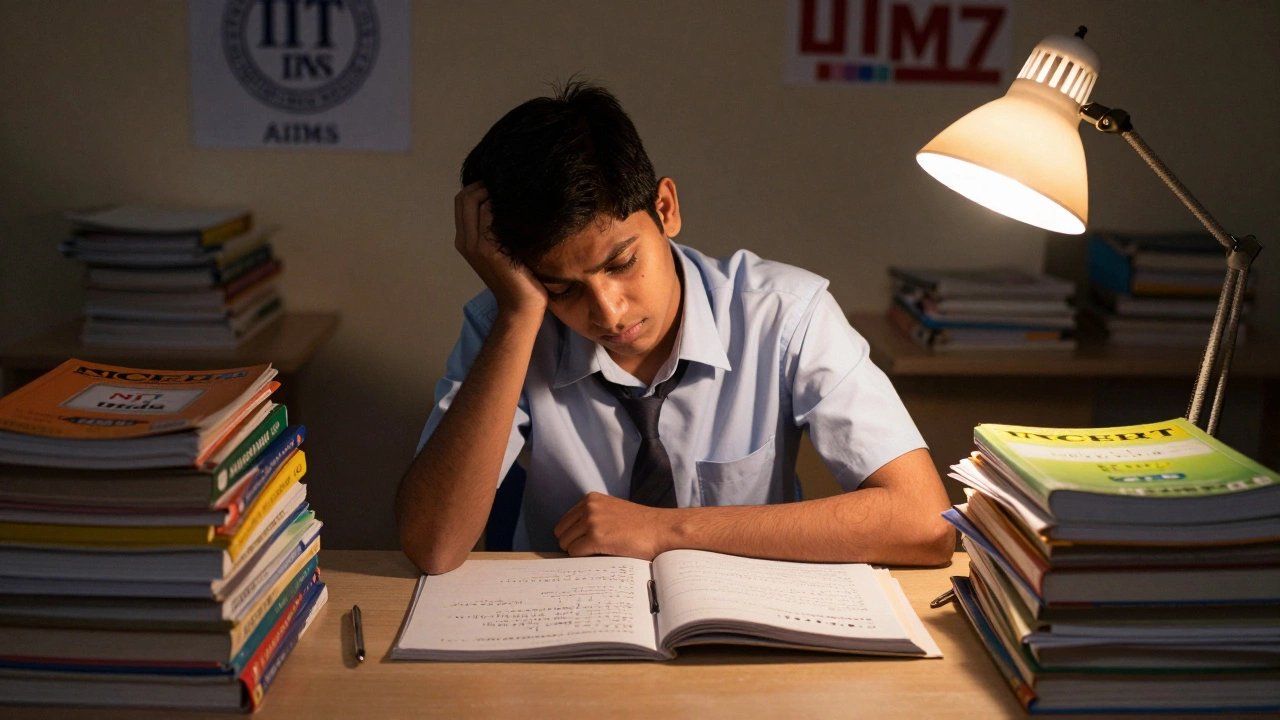
Every year, as exam season approaches, the same heated debate erupts in parent groups and school corridors. Which board is actually harder? Is the CBSE syllabus truly the most demanding, or is that just a myth created by competitive exam pressure? For students aiming for top colleges like IITs or AIIMS, the choice of board feels less like an educational preference and more like a strategic gamble.
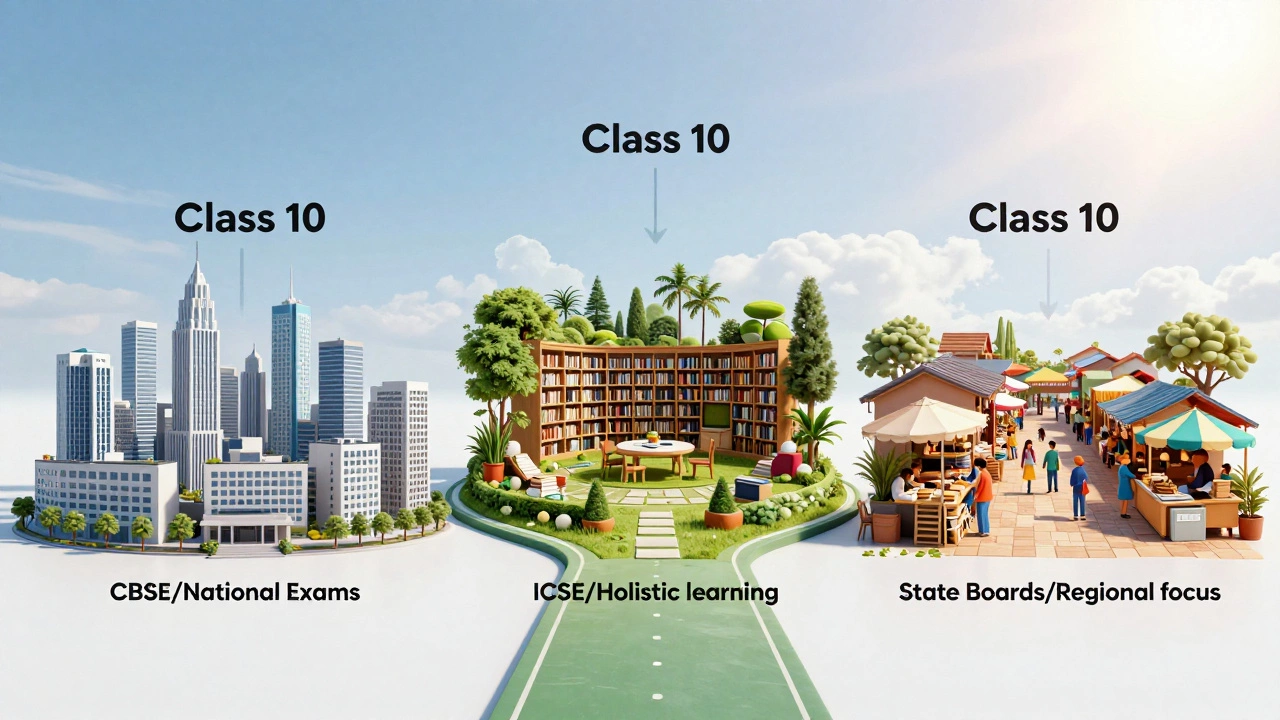
The truth isn't black and white. "Toughness" depends entirely on what you are trying to achieve. If your goal is cracking JEE Advanced, one board might feel like a mountain. If your goal is mastering English literature and critical thinking, another board might feel impenetrable. Let's break down the reality behind the reputation of India's major education boards: Central Board of Secondary Education (CBSE), the largest national board aligned with NCERT curriculum, Indian Certificate of Secondary Education (ICSE), a private board known for its comprehensive and rigorous syllabus, and the various State Boards, regional education boards managed by individual state governments.
The CBSE Myth: Is It Really the Hardest?
There is a widespread belief that CBSE is the toughest board in India. This reputation stems largely from its alignment with NCERT textbooks, National Council of Educational Research and Training books used as the standard reference for competitive exams. Since almost all major engineering and medical entrance exams-like JEE Main and NEET-base their questions directly on NCERT content, CBSE students often spend their high school years preparing for these tests rather than just focusing on their board exams.
However, if we look strictly at the board examinations themselves, CBSE is actually quite structured and predictable. The marking scheme is clear, the question patterns are consistent, and the syllabus is concise compared to other boards. Many students find that scoring 90+ in CBSE is easier than achieving the same percentage in ICSE because the questions test direct application of formulas and concepts rather than deep analytical interpretation. So, while CBSE feels tough due to the external pressure of competitive exams, the board exam itself is designed to be accessible to a large number of students across the country.
ICSE: The Hidden Challenge of Depth
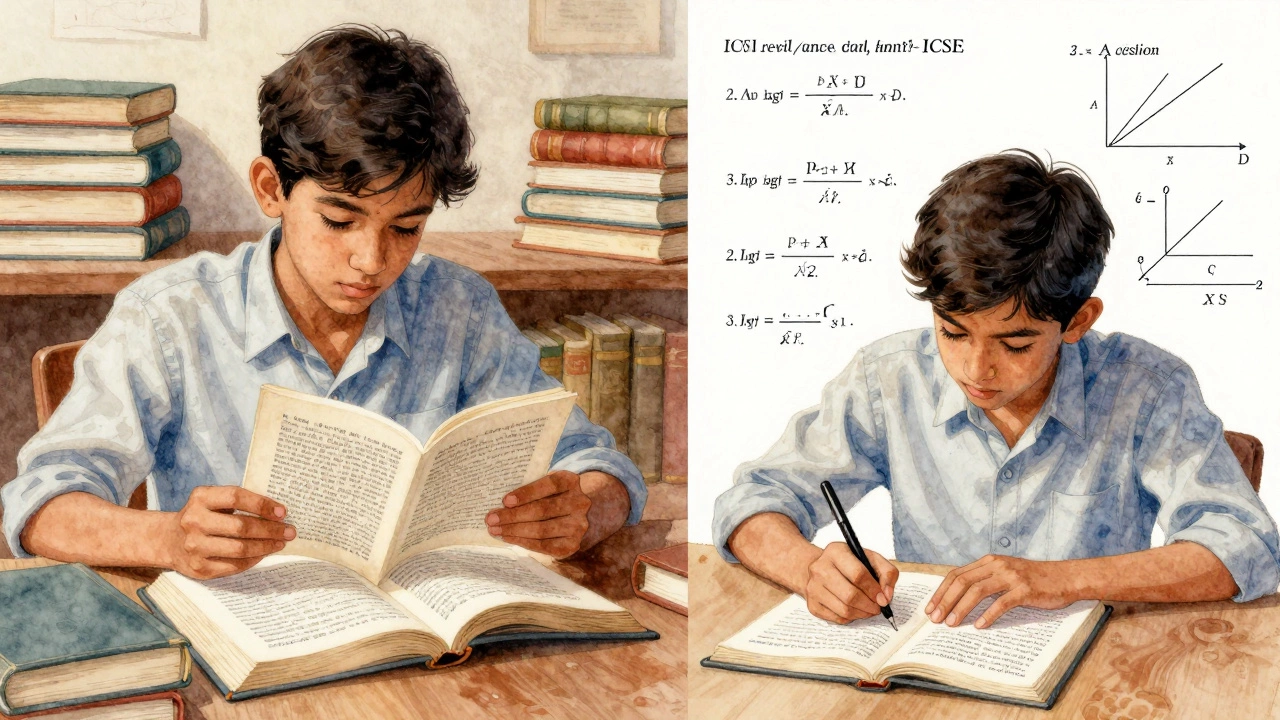
If CBSE is about breadth and alignment with national tests, ICSE is about depth and detail. Run by the Council for the Indian School Certificate Examinations, this board has a reputation for being academically rigorous. The syllabus is significantly larger. In subjects like Science and Mathematics, ICSE expects students to understand not just how to solve a problem, but why the method works. The internal assessment component is also more substantial, meaning your final grade isn't just determined by a single pen-paper test at the end of the year.
One of the biggest hurdles for ICSE students is the language requirement. Unlike CBSE, where you can choose between Hindi and English relatively easily, ICSE places a heavy emphasis on English proficiency. The English Language and Literature papers are notoriously difficult, requiring strong vocabulary, complex essay structures, and deep literary analysis. For students who struggle with language arts, ICSE can feel much tougher than CBSE. Additionally, the subjective nature of marking in ICSE means there is less room for error. A small mistake in reasoning can cost you marks, whereas CBSE often gives step-marking credit even if the final answer is wrong.
State Boards: Variable Difficulty and Regional Focus
India has over 30 state boards, each with its own unique characteristics. Generally, state boards are considered easier than CBSE and ICSE in terms of raw academic rigor. The syllabus is often shorter, the language of instruction is usually the regional language (which helps local students), and the competition is less intense. However, "easier" doesn't mean irrelevant. For students planning to stay within their home state for college admissions, the state board is the most logical choice.
But here lies the trap. If a student from a state board decides to appear for national competitive exams like JEE or NEET, they face a massive disadvantage. Their textbook may not align with NCERT, forcing them to buy separate study materials and attend coaching classes to bridge the gap. In this context, the state board becomes "tough" not because the exams are hard, but because the transition to higher education requires extra effort. Furthermore, some state boards, like those in Maharashtra or Tamil Nadu, have recently increased their difficulty levels to match national standards, making the landscape more complex.
Comparing the Boards: A Side-by-Side Look
| Feature | CBSE | ICSE | State Boards |
|---|---|---|---|
| Syllabus Volume | Moderate | High | Low to Moderate |
| Exam Pattern | Predictable, Objective-heavy | Subjective, Analytical | Varies by State |
| Language Requirement | Flexible | Strict English Proficiency | Regional Language Friendly |
| Competitive Exam Alignment | High (NCERT based) | Low (Requires extra prep) | Very Low (Major gap) |
| Marking Scheme | Clear, Step-marking | Strict, Holistic | Varies, Often Lenient |
Why Perception Matters More Than Reality
So, which is the toughest board? The answer changes depending on who you ask. A student aiming for IIT will tell you ICSE is tougher because they have to learn two curriculums simultaneously. A student struggling with English will say ICSE is impossible. A student in a remote village might say CBSE is tougher because they lack access to quality coaching. The "toughness" is often a self-fulfilling prophecy. Schools that brand themselves as "rigorous" attract ambitious parents, creating a hyper-competitive environment. This pressure makes the experience feel harder, regardless of the actual paper difficulty. It is crucial to separate the board's examination style from the school's teaching culture.
Choosing the Right Path for Your Goals
Your choice should not be driven by fear of difficulty, but by clarity of purpose. Here is a simple decision tree:
- If you want to crack JEE/NEET: Choose CBSE. The overlap with NCERT saves hundreds of hours of preparation time. The board exam itself is manageable, allowing you to focus energy on competitive coaching.
- If you value holistic education and language skills: Choose ICSE. You will develop stronger communication skills, critical thinking, and a broader knowledge base. Be prepared to work harder on independent study for competitive exams.
- If you plan to study locally: Choose your State Board. It is culturally relevant, linguistically comfortable, and sufficient for local university admissions. Just be aware of the gap if you ever decide to switch to national exams later.
Ultimately, no board guarantees success. A brilliant student can excel in any system, and a disinterested student will struggle in any. The best board is the one that matches your learning style and future aspirations. Don't let the label of "toughest" dictate your choice. Instead, look at the syllabus, talk to current students, and assess your own strengths.
Is CBSE really harder than ICSE?
Not necessarily. CBSE is generally considered easier in terms of board exam structure and marking schemes. However, it feels tougher for many students because it aligns with competitive exams like JEE and NEET, leading to higher pressure and more intensive preparation outside of school.
Which board is better for engineering aspirants?
CBSE is typically preferred for engineering aspirants because its syllabus is based on NCERT textbooks, which are the primary reference for JEE Main and Advanced. This alignment reduces the need to learn a separate curriculum for competitive exams.
Can I switch from ICSE to CBSE in Class 11?
Yes, you can switch boards in Class 11, but it comes with challenges. You will need to adapt to a different syllabus and teaching style quickly. Most schools allow this transition, but you may miss out on foundational concepts covered in earlier grades under the new board.
Are state boards recognized for university admissions?
Yes, all recognized state boards are valid for university admissions. However, for central universities or highly competitive institutes like IITs and NITs, students from state boards often need to take entrance exams to prove their competency, as their board marks may not carry the same weight as CBSE or ICSE scores.
Which board has the highest percentage of toppers?
CBSE often reports a higher number of students scoring above 95% due to its standardized marking scheme and larger student base. However, ICSE students frequently perform well in international assessments and subjective evaluations, suggesting a deeper understanding of concepts despite lower aggregate percentages.