Which Exam Is the Hardest to Pass? Top 5 Most Difficult Competitive Exams Worldwide
 Mar, 13 2026
Exam Difficulty Comparison Tool
Compare the World's Hardest Competitive Exams
Select which exams you want to compare to see their key difficulty metrics
Select Exams to Compare
Not all exams are created equal. Some tests are designed to filter out 99% of applicants. Others push students to their mental and physical limits for months, even years. If you’ve ever wondered which exam is the hardest to pass, the answer isn’t just about difficulty-it’s about scale, stakes, and survival rate.
What Makes an Exam Hard?
Hardness isn’t just about tough questions. It’s the combination of:
- Pass rate - how few actually make it through
- Preparation time - how many years of study are required
- Competition - how many people are trying to beat you
- Consequences - what happens if you fail
Some exams are brutal because they’re high-stakes. Others are brutal because they’re endless. The hardest exams combine both.
1. Gaokao - China’s National College Entrance Exam
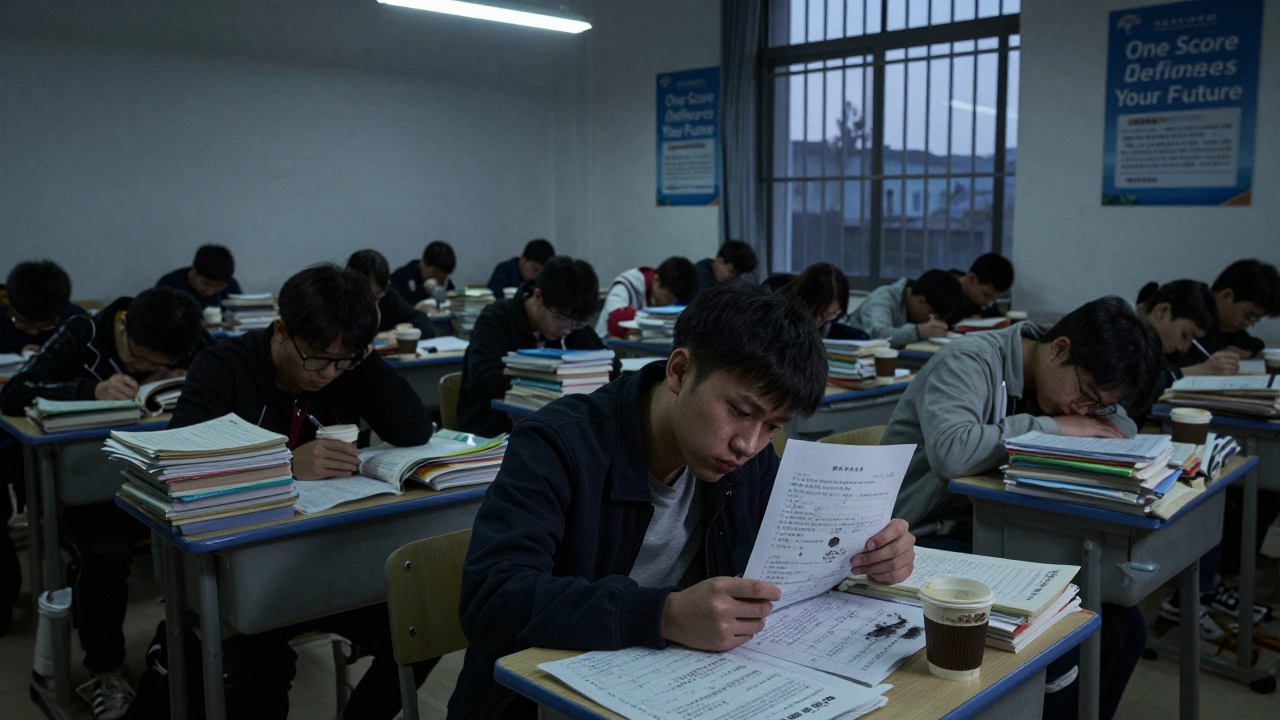
Over 12 million students take the Gaokao every year. Only one score determines their future - which university they get into, and sometimes even their career path. There’s no retake in the same year. One bad day, and your life changes forever.
The exam lasts two to three days. It covers math, Chinese, English, and either science or humanities. The math section alone can include problems that require advanced calculus, geometry proofs, and multi-step logic. Students often start preparing as early as age 10. Many spend 12-16 hours a day studying, six days a week.
Pass rates aren’t the issue - it’s the ranking. Only the top 1% get into elite schools like Tsinghua or Peking University. The pressure is so intense that suicide rates spike in the weeks after the exam. In 2023, over 1,200 students in China died by suicide during the exam period. That’s not a statistic. That’s a system.
2. UPSC Civil Services Exam - India’s Most Competitive Test
The UPSC exam is a three-stage marathon: Prelims, Mains, and Interview. The Prelims alone have 200 multiple-choice questions in two papers. Only about 0.2% of the 1.1 million applicants make it to the final list. In 2024, just 1,100 people were selected out of 1.08 million who applied.
Success requires mastering 10-12 subjects - from Indian history to international relations to ethics. Candidates often spend 1-2 years preparing full-time. Many quit jobs, move to coaching hubs like Delhi or Kota, and live on less than $200 a month.
And the interview? It’s not a Q&A. It’s a psychological test. A panel of 5-7 senior bureaucrats asks you questions about your hobbies, your views on climate policy, your stance on caste reservations - all while watching how you react under pressure. One candidate was asked: “If you were a river, which one would you be and why?”
3. IIT JEE Advanced - The Gate to India’s Top Engineering Schools
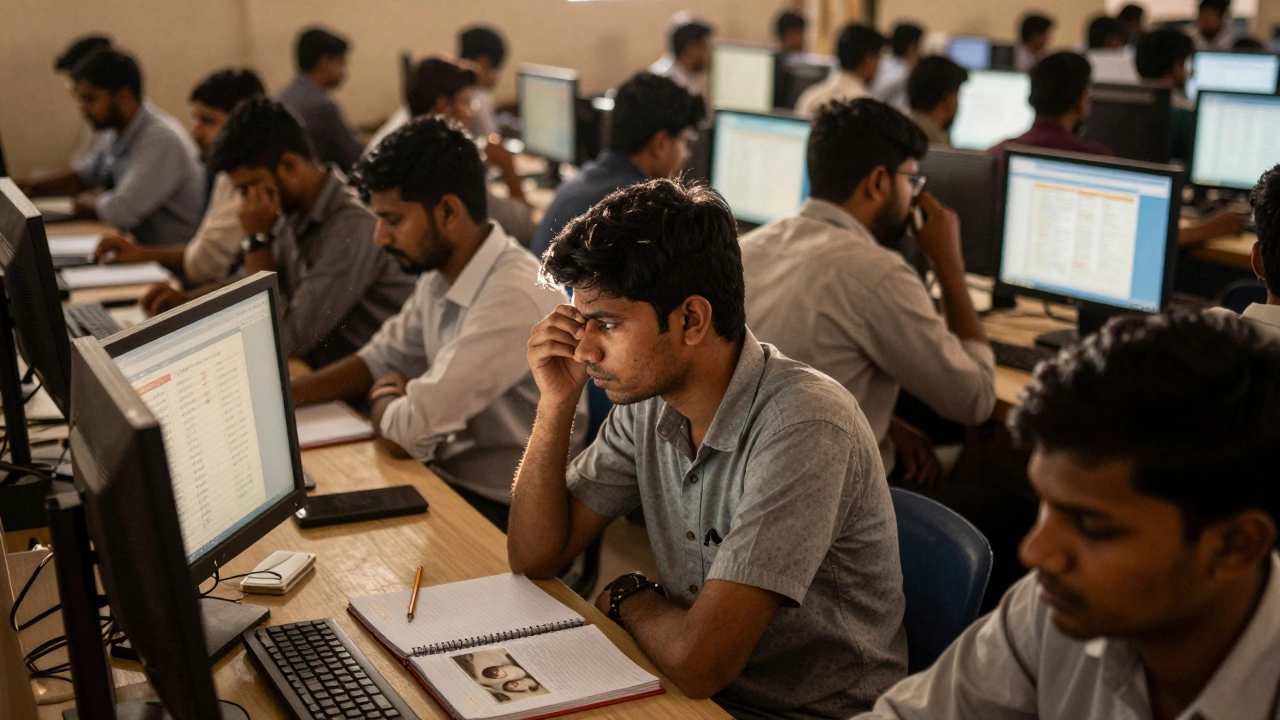
Over 250,000 students take the JEE Advanced every year. Only 10,000 get into the Indian Institutes of Technology. That’s a 4% success rate. But the real challenge? The questions are designed to be unsolvable under time pressure.
The math section includes problems that require you to combine calculus, vectors, and differential equations in ways no textbook teaches. Physics questions test intuition more than knowledge. One 2023 question asked students to calculate the motion of a charged particle in a non-uniform magnetic field - with no formula given.
Students in Kota, Rajasthan, live in dorms with 12-hour study days. Many never see sunlight for months. The suicide rate among JEE aspirants is 3x higher than the national average. And yet, they keep coming back. Why? Because getting into IIT isn’t just about education - it’s about social mobility.
4. USMLE Step 3 - The Final Hurdle for U.S. Doctors
The United States Medical Licensing Examination Step 3 is the last test doctors must pass to practice independently in the U.S. It’s not the hardest in content - but it’s the hardest in endurance.
The exam lasts two days. On day one, you answer 260 multiple-choice questions over 7 hours. On day two, you face 180 multiple-choice questions and 13 patient simulations. Each simulation requires you to diagnose, order tests, prescribe meds, and manage emergencies - all within 10-15 minutes.
Foreign-trained doctors (IMGs) have a pass rate of 68%. U.S. graduates pass at 97%. But here’s the catch: if you fail Step 3 after already spending $100,000 on medical school, you can’t practice. You can’t get a residency. You might lose your visa. Many IMGs retake it 3-4 times. Some give up medicine entirely.
It’s not about how smart you are. It’s about how steady you are under pressure. One doctor told me: “I passed Step 1 and Step 2. But Step 3? That’s the one that breaks you.”
5. California Bar Exam - The Law Test That Fails the Most
The California Bar Exam is notorious for being the hardest bar exam in the U.S. In July 2023, only 58% of first-time takers passed. Compare that to New York, where 80% passed. Florida? 77%.
Why? California tests a wider range of subjects - 14 areas of law, including community property and California-specific civil procedure. The essay section requires you to write 1,000+ words per question in 30 minutes. No time to think. No time to edit.
The performance test is even worse. You’re given a file of 100+ pages - contracts, emails, court transcripts - and asked to draft a legal memo or motion. You have three hours. No outside research. No Google. Just you and your brain.
Law schools warn students: “If you don’t pass the California Bar on your first try, you may never become a lawyer.” Many retake it three or four times. Some spend over $20,000 in prep courses and fees. The emotional toll? Real. The financial cost? Higher than most medical degrees.

Why These Exams Are So Different
Most exams test knowledge. These exams test endurance. They test mental resilience. They test whether you can keep going after years of failure.
The Gaokao doesn’t care if you’re brilliant - it only cares where you rank. The UPSC doesn’t care if you studied hard - it cares if you can think like a bureaucrat. The IIT JEE doesn’t care if you’re smart - it cares if you can solve problems faster than a computer.
And the USMLE and California Bar? They don’t just test what you know. They test whether you can perform under life-or-death pressure - because in real life, people’s lives depend on it.
What the Data Says
Here’s a quick comparison of pass rates and applicant numbers:
| Exam | Annual Applicants | Pass Rate | Preparation Time |
|---|---|---|---|
| China Gaokao | 12+ million | ~50% (for top universities) | 8-12 years |
| UPSC Civil Services | 1.1 million | 0.2% | 1-3 years |
| IIT JEE Advanced | 250,000 | 4% | 2-5 years |
| USMLE Step 3 | 50,000+ | 68-97% | 4-6 years (medical school) |
| California Bar | 15,000 | 58% | 3 years (law school) |
Notice something? The exams with the lowest pass rates aren’t the ones with the fewest applicants. It’s the ones with the highest stakes. Gaokao and UPSC don’t just test knowledge - they decide who gets to live a different life.
Is There a Winner?
There’s no single “hardest” exam. But if you had to pick one based on sheer pressure, scale, and life-altering consequences - it’s the Gaokao.
It’s the only exam where:
- 12 million people take it in one week
- Students die because they didn’t score high enough
- Parents sell homes to pay for tutoring
- A single test determines your job, your spouse, your social class
Nothing else comes close.
Is the UPSC harder than IIT JEE?
It depends on what you mean by “harder.” IIT JEE is harder in terms of technical problem-solving - the questions are designed to stump even top students. UPSC is harder in terms of volume, depth, and unpredictability. You have to memorize everything from Indian geography to international treaties, then write essays under time pressure. IIT JEE is a sprint. UPSC is a 3-year marathon with no finish line in sight.
Why is the California Bar so hard?
California tests more subjects than any other state bar exam - 14 areas of law. The essay section requires you to write 1,000+ words in 30 minutes without a spellchecker. The performance test gives you a 100-page file and asks you to draft a legal brief - in 3 hours, with no outside research. It’s not about knowing the law. It’s about applying it perfectly under extreme pressure.
Can you retake the Gaokao?
Yes - but only the next year. There’s no partial credit. No bonus points. If you score 650/750 and your dream school requires 680, you don’t get in. You have to wait a full year, study again, and hope for better luck. Many students retake it twice or even three times. The emotional toll is enormous.
Do foreign doctors fail the USMLE Step 3 more often?
Yes. International medical graduates (IMGs) have a pass rate of about 68%, compared to 97% for U.S. graduates. The gap isn’t because IMGs are less skilled. It’s because the exam is designed around U.S. healthcare systems - protocols, insurance rules, patient communication norms - that many foreign doctors never experienced. Many spend years studying U.S. medical culture just to pass.
What’s the best way to prepare for these exams?
There’s no shortcut. You need consistent, daily study - not cramming. For exams like UPSC or IIT JEE, joining a coaching center helps, but only if you’re disciplined. For the bar or USMLE, practice under timed conditions is critical. The real secret? Learn to manage stress. Sleep. Eat. Take breaks. The exam is long. Your mind needs to last.