What Is the Psychology Behind Competitive People in Competitive Exams?
 Jan, 23 2026
Competitive Mindset Assessment
How You Approach Competition
Answer these questions to understand your competitive psychology and identify whether you're on a healthy path or at risk of burnout.
Your Mindset Analysis
Personalized Recommendations
Why do some people wake up at 5 a.m. to study for hours, skip parties, and push through burnout just to crack a single exam? It’s not just about getting a job or a seat. There’s something deeper driving them-something rooted in how their minds work. The psychology behind competitive people isn’t about being ‘better than others.’ It’s about control, identity, and the quiet fear of being ordinary.
The Need for Control in Unpredictable Systems
Competitive exams like UPSC, NEET, or IIT JEE are high-stakes, opaque systems. The syllabus is fixed, but the cutoffs shift every year. The number of applicants grows. The competition feels random. For many, this uncertainty is unbearable. So they create their own order. They make schedules down to the minute. They track progress with spreadsheets. They redo past papers until the questions are etched into muscle memory.
This isn’t obsession-it’s a coping mechanism. A 2023 study from the University of Delhi found that students preparing for national exams who scored in the top 10% reported significantly higher levels of perceived control over their outcomes compared to those who dropped out or failed. They didn’t believe they could win. They believed they could *earn* the win. That distinction matters. It turns anxiety into action.
Identity: ‘I Am Someone Who Wins’
People who thrive in competitive environments don’t just want to pass. They want to be the kind of person who passes. Their identity becomes tied to the outcome. A student who says, ‘I’m an IIT aspirant,’ isn’t just describing a goal. They’re defining who they are. When you label yourself as a ‘competitive person,’ you start acting like one. You say no to distractions. You sacrifice comfort. You tolerate stress because it feels like part of your role.
This is called identity-based motivation. It’s not about rewards. It’s about consistency with self-image. A 2022 paper in the Journal of Educational Psychology showed that students who framed their preparation as ‘being someone who studies daily’ were 47% more likely to stick with their routine for over six months than those who focused on ‘getting good marks.’ The mindset shifts from ‘I have to do this’ to ‘This is who I am.’
The Fear of Falling Behind
Competitive people aren’t always driven by ambition. Sometimes, they’re driven by fear. Fear of disappointing parents. Fear of being the one who didn’t make it when everyone else did. Fear of ending up in a job they hate because they didn’t fight hard enough.
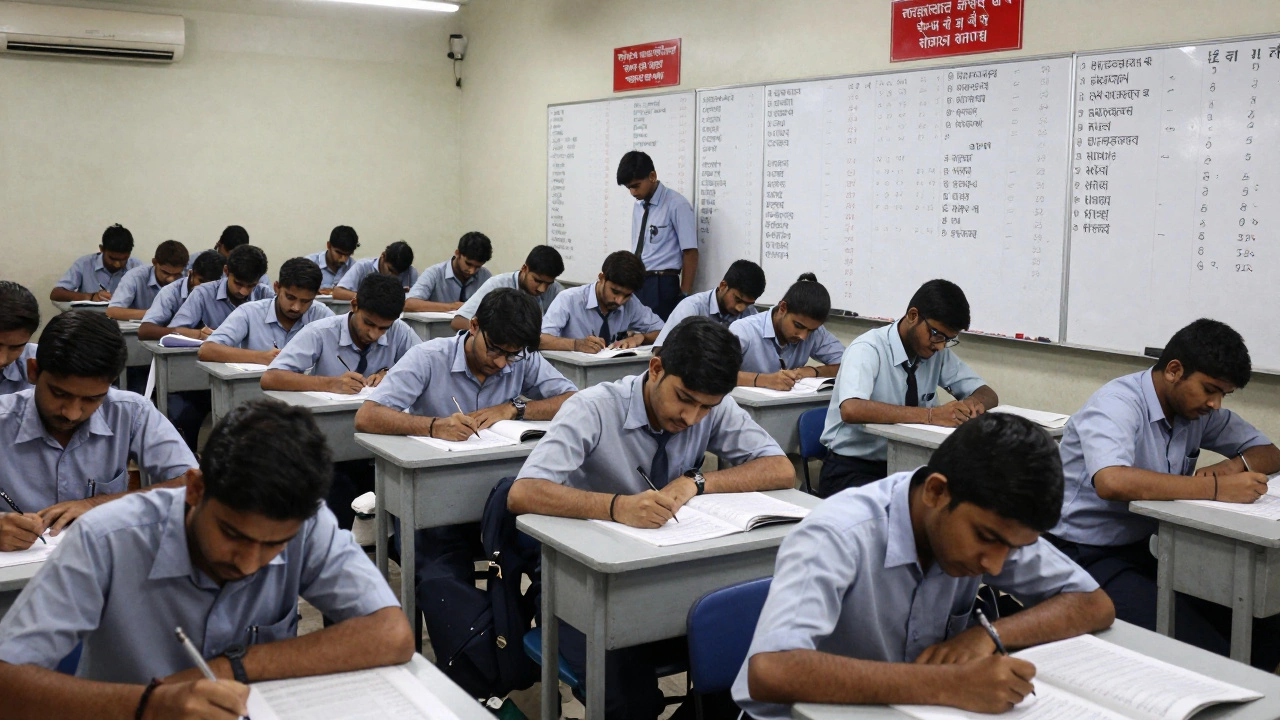
In cities like Kota, Patna, or Hyderabad, it’s common to see 17-year-olds living in small rooms with only a bed, a desk, and a wall full of motivational posters. They don’t have friends over. They don’t watch movies. Their world shrinks to one goal. This isn’t healthy-but it’s understandable. When your entire social circle is also preparing for the same exam, falling behind feels like social death. You’re not just losing a test. You’re losing your place in the group.
A 2024 survey of 2,100 aspirants in northern India found that 68% admitted they kept studying even when exhausted because they were afraid of being ‘left behind’ by peers who had already cleared preliminary rounds. The competition isn’t just against the exam. It’s against the people around you.
Progress as a Drug
There’s a reason why competitive students love trackers, charts, and daily checklists. Each completed chapter, each mock test score, each improvement in speed gives them a tiny hit of dopamine. The brain doesn’t distinguish between winning a race and ticking off a study goal. Both trigger the same reward pathway.
That’s why some students spend hours rewriting notes they already know. It’s not about learning. It’s about seeing progress. The act of writing becomes a ritual. The ink on the page is proof they didn’t waste the day. One student told me: ‘If I don’t write 10 pages a day, I feel like I’ve failed-even if I’ve understood everything.’
This is why gamified apps like Unacademy or BYJU’S work so well. They turn studying into a game with levels, streaks, and leaderboards. The competition isn’t just external-it’s built into the experience. Your progress becomes visible, measurable, and addictive.
Why Some Crack It and Others Burn Out
Not everyone who’s driven wins. Some break. Some quit. Some spiral into depression. What separates the ones who make it from the ones who don’t isn’t talent. It’s resilience built on two things: self-compassion and perspective.
Top performers don’t ignore failure. They reframe it. They don’t say, ‘I failed the test.’ They say, ‘I didn’t prepare well enough for this version of the test.’ They treat each attempt as data, not destiny. They know the exam is one snapshot, not the whole story.
One topper from Rajasthan, who cleared UPSC on her third attempt, said: ‘I stopped measuring myself against others. I started measuring myself against yesterday’s version of me. That’s when things changed.’
Those who burn out usually tie their entire worth to one outcome. When they fail, they don’t just lose an exam-they lose themselves. That’s why mental health support is no longer optional in coaching centers. Some institutes now require weekly counseling sessions. Others have ‘rest days’ built into the schedule. Because no amount of discipline can replace emotional balance.

What Happens After You Win?
Here’s the twist: many who win feel empty. They thought winning would bring peace. Instead, they face a new question: ‘What now?’
One IIT graduate told me: ‘For eight years, I had one goal. When I got in, I had no idea who I was without it. I didn’t know how to relax. I didn’t know what I liked.’
That’s the hidden cost of hyper-competition. The mind becomes trained to chase, not to enjoy. The psychology that drives success can also block fulfillment. That’s why many top scorers later switch careers, travel, or take years off to rediscover themselves.
The most successful people in the long run aren’t the ones who cracked the exam. They’re the ones who learned how to stop defining themselves by it.
Can You Change Your Competitive Mindset?
Yes-but not by forcing yourself to ‘be less competitive.’ That’s like telling a runner to stop wanting to win. The drive is part of you. The trick is to redirect it.
Start by asking yourself: ‘Am I doing this for me, or because I think I’m supposed to?’
Write down what you truly want from this exam. Not what your parents want. Not what your friends are doing. What do *you* want? A secure job? A chance to help others? To prove something to yourself?
Then, build your plan around that-not around beating others. Track your growth, not your rank. Celebrate small wins. Rest without guilt. And remember: the exam doesn’t define your value. Your curiosity, your resilience, your willingness to keep trying-that’s what does.
Competition is a tool. Not a destiny.
Why do some students push through burnout while others quit?
Students who push through usually tie their identity to their goal-they see themselves as someone who doesn’t give up. They also have small, daily wins to celebrate, which keep their motivation alive. Those who quit often feel isolated, lack emotional support, or believe their worth depends entirely on one outcome. Burnout hits harder when there’s no sense of meaning beyond the exam.
Is being competitive a good thing for exam preparation?
It can be, if it’s focused on personal growth, not comparison. Healthy competition drives discipline, consistency, and resilience. Unhealthy competition leads to anxiety, self-worth crashes, and burnout. The key is measuring progress against your past self, not against others’ results.
Do competitive people usually succeed in life after the exam?
Many do-but not because they won the exam. They succeed because they learned how to set goals, manage stress, and persist through difficulty. But others struggle because they never learned how to live without a goal. Success after the exam depends on whether you can redefine your identity beyond the test score.
Can you become more competitive if you’re not naturally driven?
You can’t force motivation, but you can build habits that create it. Start small: commit to 30 minutes of focused study every day. Track your progress. Celebrate consistency, not perfection. Over time, your brain starts to associate effort with reward. That’s how discipline becomes drive. You don’t need to be a natural competitor-you just need to show up.
How do coaching centers exploit competitive psychology?
They use visible rankings, leaderboards, and public announcements of top scorers. They create a culture where your worth is tied to your rank. They sell hope as a product: ‘If you study like this, you’ll be next.’ It’s effective-but it can be emotionally damaging. The best centers now balance this with mental health support and individualized feedback.