What Is Harder: Coding or Math?
 Jan, 27 2026
Coding vs Math Learning Style Quiz
Which Problem-Solving Approach Suits You Best?
People often ask which is harder: coding or math. It feels like a fair question-both involve logic, patterns, and problem-solving. But the truth is, they’re not even the same kind of hard. One is about abstract thinking in a vacuum. The other is about building something real, one broken line of code at a time.
Coding isn’t math-you’re just using math to get there
Most beginners think coding is just applied math. They remember high school algebra and assume if they struggled with quadratic equations, they’ll struggle with Python. That’s not true. You don’t need calculus to build a website. You don’t need linear algebra to make a mobile app. Most real-world coding tasks rely on basic arithmetic, logic gates, and conditional statements.
What coding actually demands is persistence. It’s not about getting the right answer on the first try. It’s about getting the right answer after 17 tries. A missing semicolon, a typo in a variable name, an off-by-one error-these aren’t math problems. They’re debugging problems. And debugging isn’t solved by formulas. It’s solved by patience, observation, and repetition.
Think of it like cooking. You don’t need to know the chemistry of Maillard reactions to make a good steak. You just need to know when to flip it, how long to let it rest, and what to do when it’s burnt. Coding is the same. You learn by doing, failing, and trying again.
Math is about certainty. Coding is about chaos.
Math has rules. If you follow them correctly, you get one answer. Two plus two is always four. The derivative of x² is always 2x. There’s a right way and a wrong way. And if you mess up, you know exactly where you went wrong because the math doesn’t lie.
Coding? Not even close. Two people can write the same program in 15 different ways and all of them might work. One might be faster. One might be easier to read. One might break when the server reboots. There’s no single right answer-only trade-offs.
And then there’s the environment. Math lives on paper. Coding lives in a world of changing APIs, outdated libraries, conflicting dependencies, and undocumented systems. You can write perfect code, and still get an error because a third-party service changed its response format overnight. That’s not a math problem. That’s a real-world problem.
Why people think coding is harder
Most people who say coding is harder are actually struggling with the lack of structure. In math class, you’re given a problem, taught a method, and told to apply it. You get feedback immediately-right or wrong.
In coding, you’re often handed a goal: “Build a login page.” No method. No formula. Just a blank screen and a browser. You have to figure out what tools to use, how to connect them, how to test it, and how to fix it when it breaks. That’s overwhelming if you’re used to having a clear path.
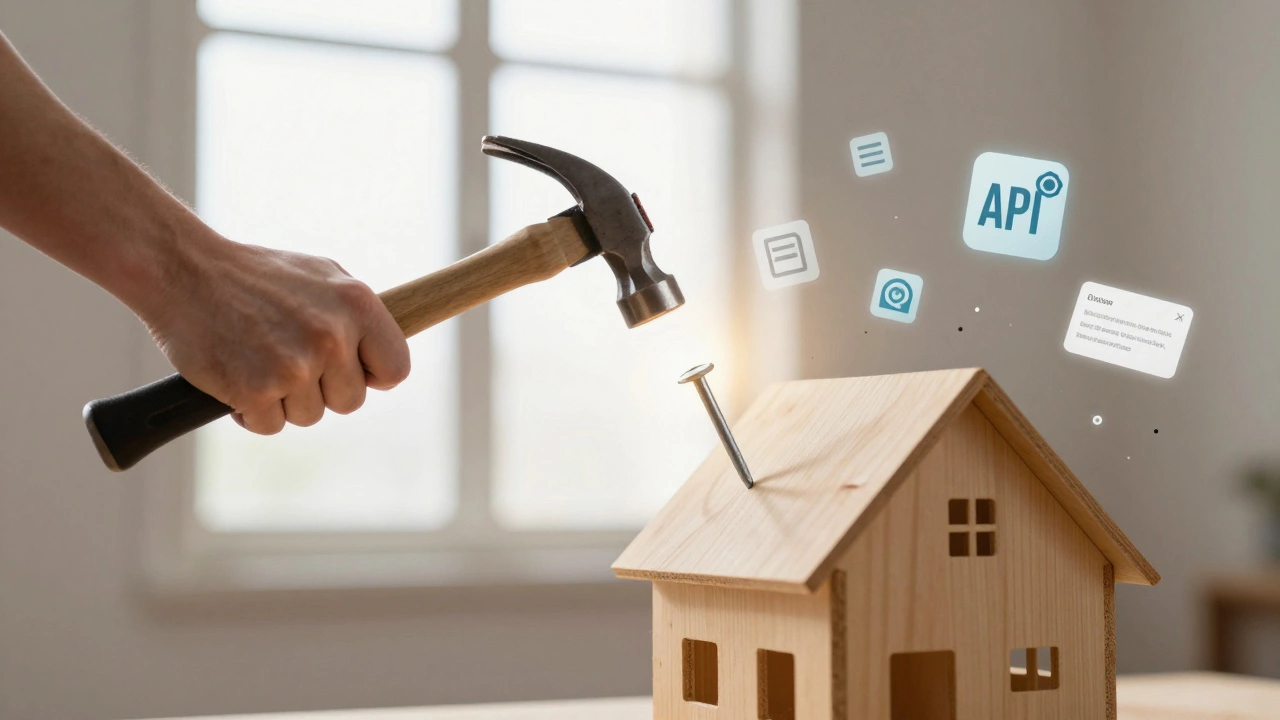
It’s like being told to build a house without blueprints, tools, or instructions. You have to learn what nails do, how a hammer works, and why the roof leaks-all at the same time.
Why math feels harder to some
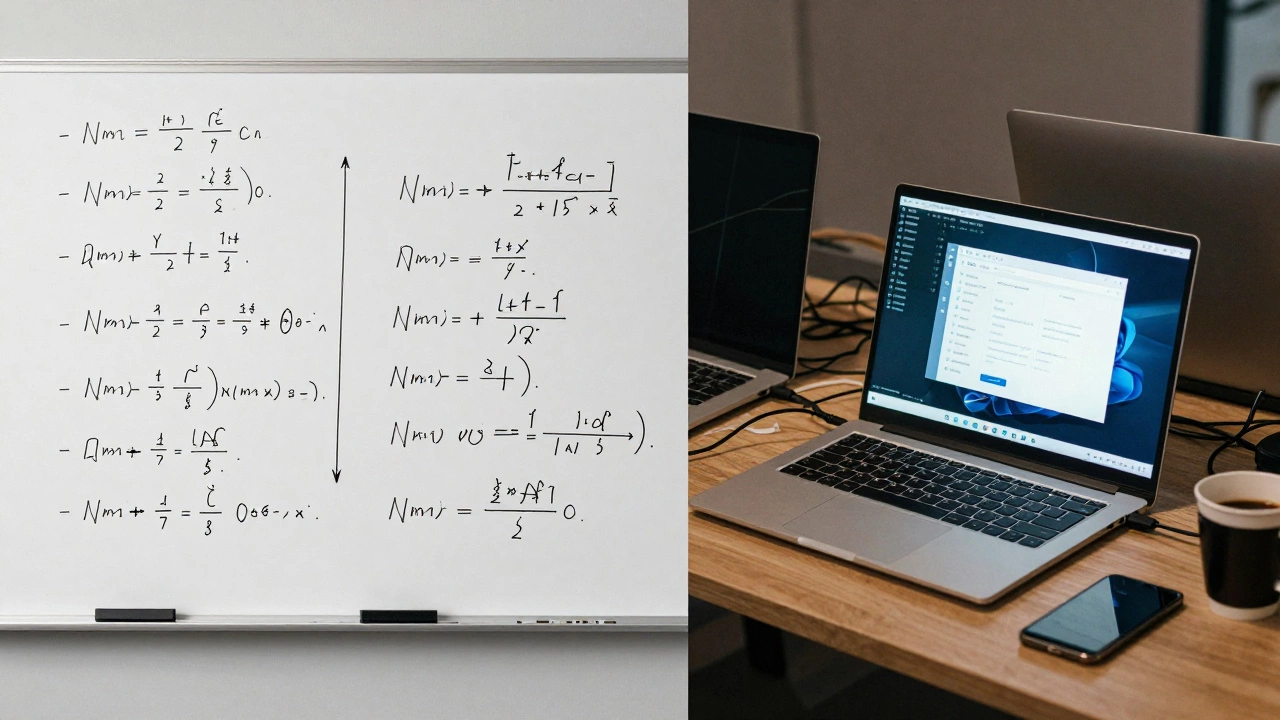
On the flip side, people who find math harder often come from backgrounds where abstract thinking wasn’t emphasized. Math doesn’t care if you understand the concept-it only cares if you can apply the rule. If you don’t grasp why the quadratic formula works, you can still plug in numbers and get the right answer. But if you don’t understand the underlying logic, you’ll hit a wall later.
And math doesn’t forgive mistakes. One wrong step in a proof, and the whole thing collapses. There’s no “it still runs” exception. No console.log() to check your variables. You’re either right or you’re not.
For someone who thinks visually or learns by doing, math can feel like trying to paint a picture while blindfolded. Coding, even when frustrating, gives you immediate feedback. You run the code. You see the result. You adjust. It’s tactile. Math is silent.
Real-world examples: What do people actually do?
Let’s say you’re building a budget app. You need to calculate monthly expenses, track savings, and show trends. The math involved? Addition, subtraction, percentages. You learned that in fifth grade.
What’s hard? Making sure the app doesn’t crash when someone types “five dollars” instead of “5.00.” Making sure it syncs across devices. Making sure it works on an old Android phone. Making sure the user doesn’t accidentally delete their data. That’s not math. That’s engineering.
Now imagine you’re solving a differential equation for a physics simulation. That’s pure math. You need to know boundary conditions, initial values, numerical methods. One wrong assumption, and your whole model is garbage. No second chances. No debugging tools. Just your brain and a textbook.
One is about creating something that works in a messy world. The other is about proving something is true in a perfect world.
Which one should you learn first?
If you want to build things-apps, websites, games, tools-start with coding. You don’t need to be good at math to get started. You just need to be willing to try, fail, and try again.
If you’re drawn to patterns, abstract logic, and solving puzzles for their own sake, math might feel more natural. But even then, you don’t need to master calculus to become a great coder. Most developers use less than 5% of the math they learned in school.
Here’s what most successful coders actually use:
- Basic arithmetic (addition, subtraction, multiplication, division)
- Logic operators (AND, OR, NOT)
- Variables and conditionals
- Loops and arrays
- Simple statistics (averages, percentages)
That’s it. The rest? You learn it as you need it. You don’t need to know trigonometry to make a button move across the screen. You just need to know how to change its position with JavaScript.
The real question isn’t which is harder-it’s what kind of thinker you are
Math rewards precision. Coding rewards iteration. Math is about finding truth. Coding is about solving problems that don’t have perfect answers.
If you like clear rules and getting things right the first time, math might feel more satisfying. If you like building things, fixing broken stuff, and seeing results-even if they’re messy-you’ll thrive in coding.
And here’s the secret: most people who say they’re “bad at math” are actually just bad at sitting still long enough to work through a proof. Most people who say they’re “bad at coding” are just frustrated because they expected instant success.
Neither is inherently harder. They’re just different kinds of challenges. One is a solo puzzle. The other is a team sport with constantly changing rules.
Final thought: You don’t have to choose
You don’t need to pick one over the other. The best coders understand enough math to know when it’s useful. The best mathematicians who work in tech learn enough coding to automate their work.
Math gives you the language to describe patterns. Coding gives you the tools to act on them. Together, they’re powerful. But you don’t need both to start.
Start with what excites you. If you want to make something, start coding. If you want to understand why things work, start with math. You can always learn the other later.
Do you need to be good at math to learn coding?
No. Most everyday coding tasks require only basic arithmetic and logic. You don’t need calculus, trigonometry, or advanced algebra to build websites, apps, or automation tools. The math you use in coding is usually limited to addition, subtraction, percentages, and conditional logic-all things most people learn by age 12.
Why do some people find coding harder than math?
Coding feels harder because it lacks clear right or wrong answers. In math, if you follow the steps, you get one correct result. In coding, there are dozens of ways to solve the same problem, and many of them work-until they don’t. Debugging broken code, dealing with unpredictable systems, and learning tools that change overnight makes coding feel chaotic compared to the structured nature of math.
Can you be good at math but bad at coding?
Yes. Many people who excel in math struggle with coding because coding requires patience with ambiguity. Math rewards perfect logic. Coding rewards trial and error. Someone who gets frustrated when things don’t work on the first try might find coding overwhelming-even if they can solve complex equations effortlessly.
Is coding just applied math?
No. While coding uses math occasionally, it’s primarily about problem-solving in a messy, changing environment. It’s about writing instructions that computers follow, handling errors, managing dependencies, and making things work for real users-not proving theorems. The math involved is usually minimal and practical, not theoretical.
Which should a beginner focus on: math or coding?
If you want to build apps, websites, or tools, start with coding. You’ll learn the math you need as you go. If you’re drawn to abstract patterns and logic puzzles, start with math. The two skills complement each other, but you don’t need both to begin. Focus on what excites you-progress comes from motivation, not prerequisites.