Is Online Learning the Same as eLearning? Clear Differences Explained
 Feb, 24 2026
eLearning vs Online Learning Checker
This tool helps you determine whether a learning experience qualifies as eLearning (structured, assessed, certificate-based) or is simply online learning (any internet-based education, regardless of structure).
Describe your learning experience:
eLearning Results
This learning experience qualifies as eLearning because it has multiple key characteristics of structured digital education:
Online Learning Results
This is simply online learning. It offers internet-based education but lacks the structured elements of eLearning. It works well for:
- Learning for curiosity or fun
- Quick topic exploration
- Informal skill building
Why This Matters
eLearning is essential for compliance, certification, and structured skill development. Online learning is great for casual learning but lacks tracking and certification. Always check what type of learning you're engaging with!
People use the terms online learning and eLearning like they mean the same thing. But they don’t. Mixing them up can lead to bad choices - whether you’re picking a course, designing a training program, or just trying to understand what’s out there. Let’s cut through the confusion.
What is eLearning?
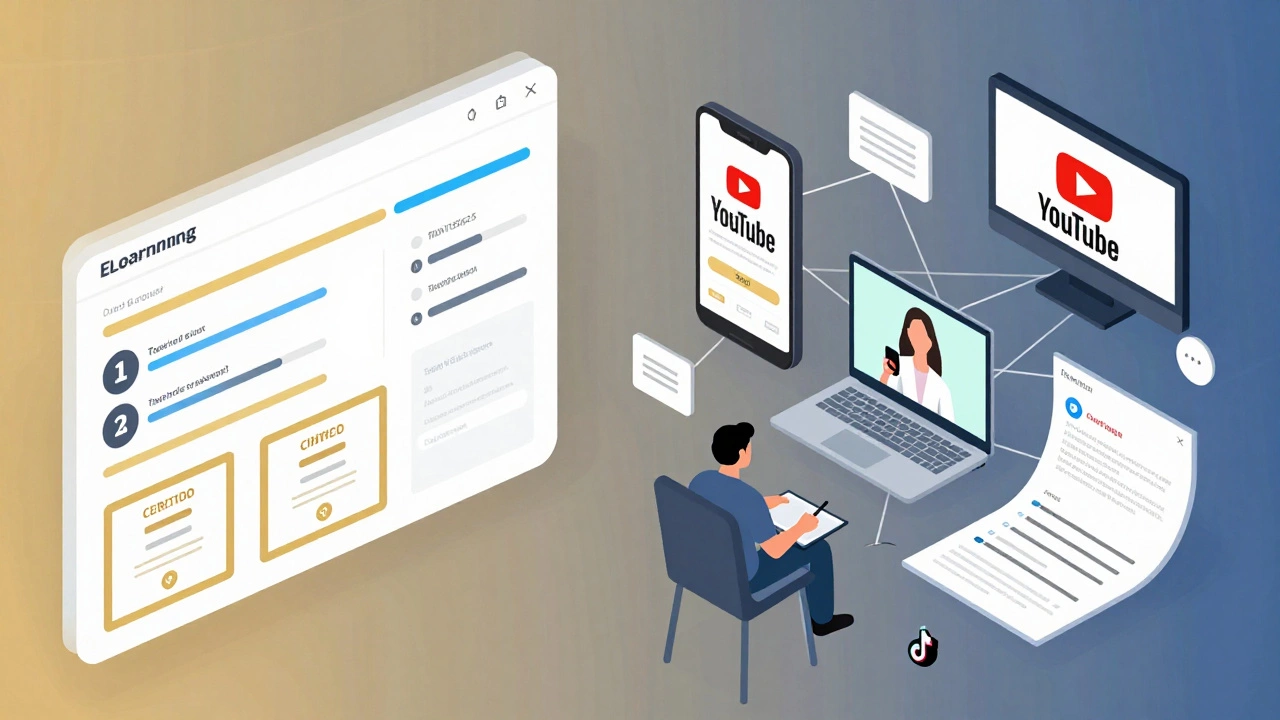
eLearning is a structured, technology-based method of delivering education using digital tools, often with pre-designed content, assessments, and learning paths. Also known as electronic learning, it emerged in the late 1990s alongside early learning management systems like Blackboard and Moodle.
eLearning isn’t just watching a video. It’s built around learning objectives, measurable outcomes, and often includes interactive elements like quizzes, simulations, branching scenarios, and progress tracking. Think of it like a digital textbook with built-in tests, feedback loops, and certificates. Companies like Coursera, Udemy, and LinkedIn Learning use this model heavily.
Key features of eLearning:
- Pre-built curriculum with defined milestones
- Automated assessments and grading
- Learning paths tailored to skill levels
- Completion certificates issued by the platform
- Often follows instructional design models like ADDIE or SAM
What is online learning?
online learning is any form of education delivered over the internet, regardless of structure, interactivity, or design. It’s the broadest term - a container for everything from live Zoom classes to YouTube tutorials to recorded lectures.
Online learning doesn’t require a curriculum. It doesn’t need assessments. It doesn’t even need a teacher. A high school student watching a TikTok chemistry tutorial is doing online learning. A nurse taking a free webinar on CPR is doing online learning. A college student joining a live lecture via Google Meet? Also online learning.
Here’s what online learning includes:
- Live virtual classrooms (Zoom, Teams, Webex)
- Recorded video lectures (YouTube, Vimeo)
- Discussion forums and social learning groups
- Self-paced YouTube playlists
- Webinars with Q&A
Notice anything? Online learning can include eLearning - but not the other way around.
The difference in one sentence
eLearning is a system. Online learning is a channel.
All eLearning happens online, but not all online learning is eLearning. Think of it like coffee. All espresso is coffee, but not all coffee is espresso. eLearning is the espresso - carefully crafted, measured, and designed. Online learning is the whole coffee shop: drip, latte, cold brew, instant, even that powdered stuff from the gas station.
Real-world examples
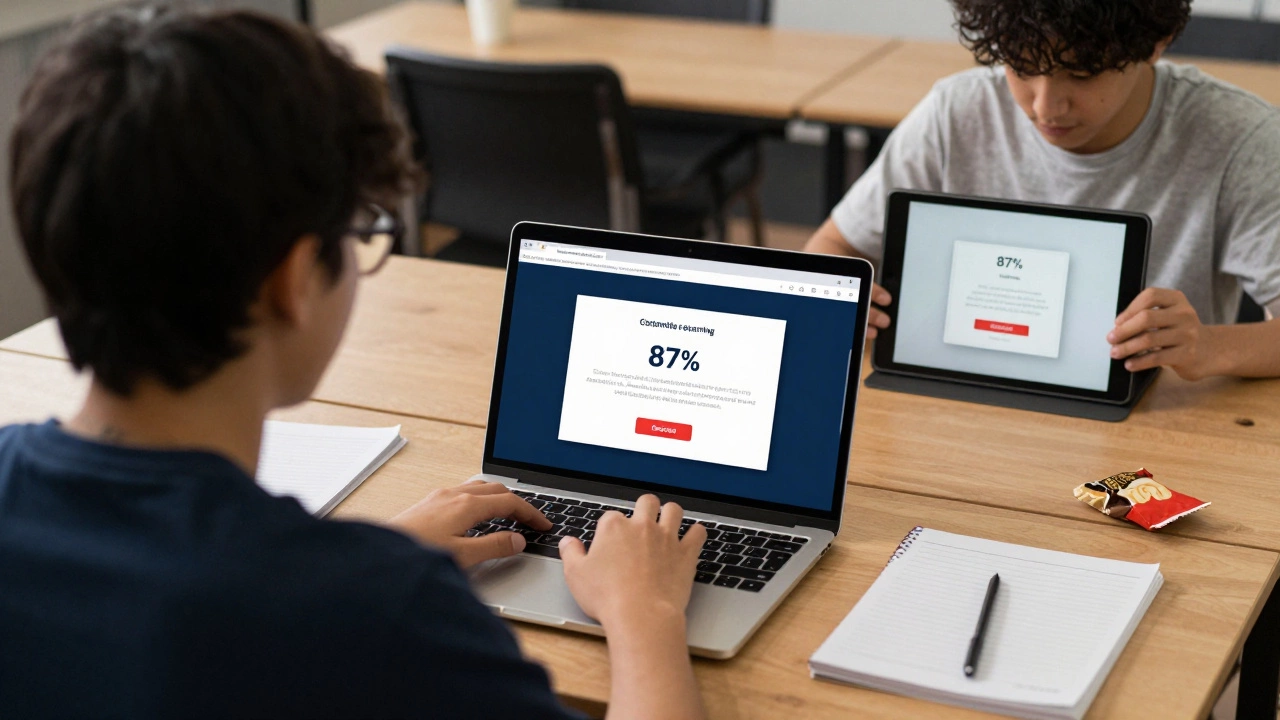
eLearning example: A corporate compliance course on Salesforce Learning Cloud. It has mandatory modules, timed quizzes, progress tracking, and a certificate at the end. If you don’t finish, you can’t move on. It’s tracked, logged, and reported to HR.
Online learning example: Someone searches "how to fix a leaky faucet" on YouTube and watches a 12-minute video. No login. No quiz. No certificate. Just a video. That’s online learning - and it’s perfectly valid. But it’s not eLearning.
Another one: A university offering a full online MBA with weekly live sessions, discussion boards, graded assignments, and a capstone project? That’s eLearning - because it’s structured. A person watching free MBA lectures on YouTube? That’s online learning.
Why does this matter?
If you’re a student, this affects your expectations. If you sign up for an "online course" and expect a certificate, interactive feedback, and a clear path to mastery - you might be disappointed if it’s just a bunch of videos.
If you’re an educator or business trainer, mixing these up can cost you. Designing a training program as "online learning" when you need compliance tracking? You’ll end up with no proof people actually learned. That’s risky in healthcare, finance, or legal industries.
Even platforms get it wrong. Some market themselves as "eLearning platforms" when they’re really just video libraries. You’re paying for structure and outcomes - not just access.
Which one should you choose?
Ask yourself:
- Do you need proof of completion? → Go for eLearning.
- Are you learning for fun or curiosity? → Online learning works fine.
- Is this for work, certification, or compliance? → eLearning is required.
- Do you want feedback, quizzes, or personalized paths? → eLearning.
- Are you just trying to understand a topic quickly? → Online learning is faster.
For example: If you’re preparing for a certification exam like PMP or CompTIA, you need eLearning - because you need practice tests, progress tracking, and structured review. If you’re learning Spanish to chat with your partner’s family? A free YouTube series or language app with live practice might be enough.
The future: Blending both
The best learning experiences now blend both. Platforms like Khan Academy and Duolingo started as eLearning systems but now include live community features, user-generated content, and social challenges - which are forms of online learning.
Hybrid models are becoming standard. A learner might start with a structured eLearning module, then join a live discussion group (online learning), and finally submit a project for peer review (another form of online interaction).
But the core distinction still holds: structure and measurement define eLearning. Access and flexibility define online learning.
Bottom line
Don’t let marketers fool you. "Online" doesn’t mean "smart" or "structured." If you’re paying for education, check what you’re actually getting. Is it a video library? Or a learning system with goals, feedback, and proof?
eLearning is for when you need to know something correctly. Online learning is for when you just want to know something.
Is eLearning only for businesses?
No. eLearning is used everywhere - from K-12 schools using platforms like Google Classroom with quizzes and progress tracking, to universities offering accredited online degrees, to individuals taking certification prep courses on platforms like Coursera. Any structured, assessed, certificate-awarding digital course is eLearning, regardless of who’s using it.
Can I call YouTube tutorials eLearning?
Not unless they’re part of a structured system. A single YouTube video with no quiz, no progress tracking, and no certification is online learning. If a teacher creates a full course on YouTube with 10 videos, weekly quizzes, assignments, and a final project - that becomes eLearning. The platform doesn’t define it; the design does.
Are MOOCs considered eLearning or online learning?
MOOCs (Massive Open Online Courses) like those on edX or Coursera are eLearning. They have structured modules, deadlines, graded assignments, peer reviews, and often offer certificates. Even though they’re open and free to join, their design follows eLearning principles - making them a prime example of the category.
Does eLearning require internet access?
Yes - by definition. eLearning relies on digital delivery, which requires internet access to load content, submit assignments, take quizzes, or access learning platforms. Some platforms offer offline downloads (like apps for mobile learning), but the core experience still depends on the internet for syncing progress, grading, and certification.
Is distance education the same as eLearning?
Distance education is a broader term that includes eLearning but also covers non-digital methods like mailed textbooks, recorded audio lessons, or correspondence courses. eLearning is the digital subset of distance education. So all eLearning is distance education, but not all distance education is eLearning.