Is It Better to Learn Programming or Coding?
 Feb, 27 2026
People often say "learn to code" like it’s one thing. But if you’ve ever sat in a coding class and heard the instructor switch between "programming" and "coding," you’ve probably wondered: are they the same thing? And does it even matter which one you focus on?
The short answer? Yes, it matters. A lot.
Let’s cut through the noise. You don’t need to master both terms to build an app or land a job. But if you understand the difference, you’ll learn faster, avoid frustration, and know exactly what to study next.
What’s the real difference between coding and programming?
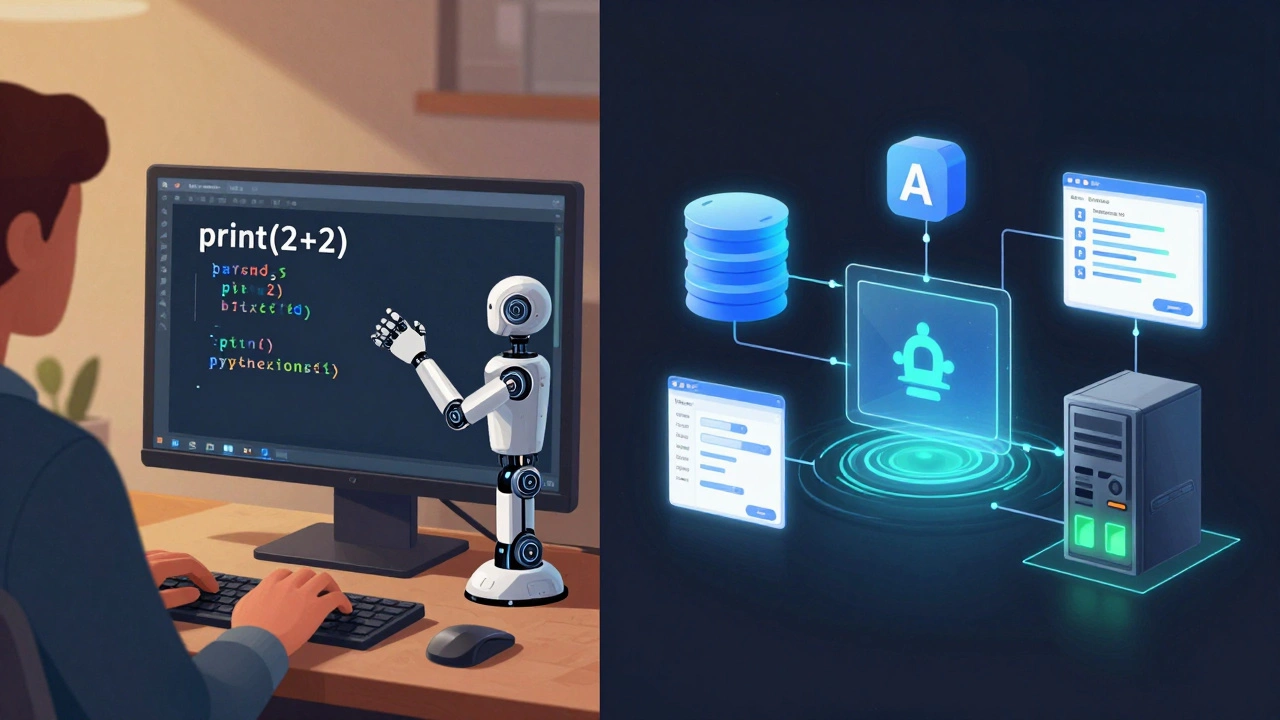
Coding is the act of writing instructions in a language a computer can understand. Think of it like typing a recipe into a kitchen robot. You write: "add 2 cups flour, stir for 3 minutes, bake at 350°F." That’s coding. It’s precise. It’s syntax. It’s turning human ideas into lines of Python, JavaScript, or Java.
Programming is the whole process of building a working system. It includes planning what the software should do, designing how components talk to each other, testing for bugs, fixing performance issues, and making sure it works for real users. Coding is one step in programming - like using a wrench is one step in building a car.
Here’s a real example. A student learns Python and writes a script that adds two numbers. That’s coding. But if they build a web app that lets 1,000 users add numbers, stores results in a database, handles login, and scales when traffic spikes - that’s programming. The coding part is small. The programming part is everything else.
Why does this confusion exist?
Most bootcamps and YouTube tutorials say "learn to code." It sounds simpler. It’s catchier. But that’s marketing, not accuracy. When a course promises to teach you "coding" in 8 weeks, they usually mean: "learn enough syntax to write a basic app." That’s not programming. It’s the starting line.
Companies don’t hire people who can just "code." They hire people who can solve problems. That’s programming. If you walk into an interview and say "I know Python," they’ll ask: "Can you design a system that logs user activity, handles concurrent requests, and recovers from crashes?" That’s not about syntax. That’s about architecture, logic, and debugging.
What should beginners focus on?
If you’re just starting out, yes - start with coding. Learn the basics of a language. Write loops. Build a calculator. Make a to-do list app. Get comfortable with syntax. That’s your foundation.
But don’t stop there. After 2-4 weeks, shift focus. Start asking: "How does this fit into a bigger system?"
- How do I organize my code so it’s easy to change later?
- What happens when 10 people use my app at once?
- How do I test if my code actually works?
- Where do I store data? How do I get it back?
These aren’t coding questions. They’re programming questions.
Many beginners hit a wall after a few months because they think mastering syntax means they’re ready. They’re not. They’ve learned to type. Now they need to learn to think.

What do employers really want?
Look at job postings. You’ll see titles like "Software Engineer," "Backend Developer," or "Full-Stack Developer." Not "Coder."
Here’s what they ask for in practice:
- "Experience with version control (Git)" - that’s not coding, that’s process.
- "Build REST APIs" - that’s design, not typing.
- "Optimize database queries" - that’s analysis, not syntax.
- "Debug production issues" - that’s problem-solving, not writing code.
Even entry-level roles expect you to understand how code fits into a system. A junior developer doesn’t just write functions. They read logs, reproduce bugs, write tests, and collaborate with designers and product managers.
Companies in Toronto, like Shopify, RBC, or Wattpad, don’t hire people who can only "code." They hire people who can build, test, and maintain software. That’s programming.
How to train for programming, not just coding
Here’s how to move from typing commands to solving real problems:
- Build projects that use more than one tool. Don’t just write Python scripts. Connect them to a database (like PostgreSQL), add a web interface (using Flask or Django), and deploy them (on something like Render or Heroku).
- Read other people’s code. GitHub is full of open-source projects. Find one with 1,000+ stars and try to understand how the pieces fit together.
- Break things on purpose. Change one line in a working app and see what breaks. Then fix it. This teaches you how systems interact.
- Learn to write tests. Even simple unit tests. If you can’t test it, you don’t really understand it.
- Join a coding group. Pair programming - working with someone else on the same code - forces you to think beyond your own lines.
One student I know spent 3 months learning Python syntax. Then she built a weather app that pulled data from an API, stored it in a local database, and showed trends on a chart. She didn’t just code - she programmed. Within 2 months, she got an internship at a fintech startup.
What’s the best path forward?
Start with coding. But treat it like learning the alphabet. You need to know the letters before you write a novel.
Then, switch gears. Focus on:
- Problem decomposition - breaking big problems into small, solvable parts
- System design - how components connect and communicate
- Debugging strategies - not just fixing errors, but finding where they come from
- Version control - Git isn’t optional. It’s the backbone of real software teams
- Testing - writing tests isn’t extra work. It’s how you know your code won’t break tomorrow
Most coding classes skip these. They teach you to write a function. They don’t teach you why that function matters in the bigger picture.
If you’re choosing a course, ask: "Does this teach me how to build something real - not just copy code?" If the answer is no, keep looking.
Final thought: It’s not either/or - it’s both, in order
You can’t skip coding. But you can’t stop there.
Coding is the tool. Programming is the craft.
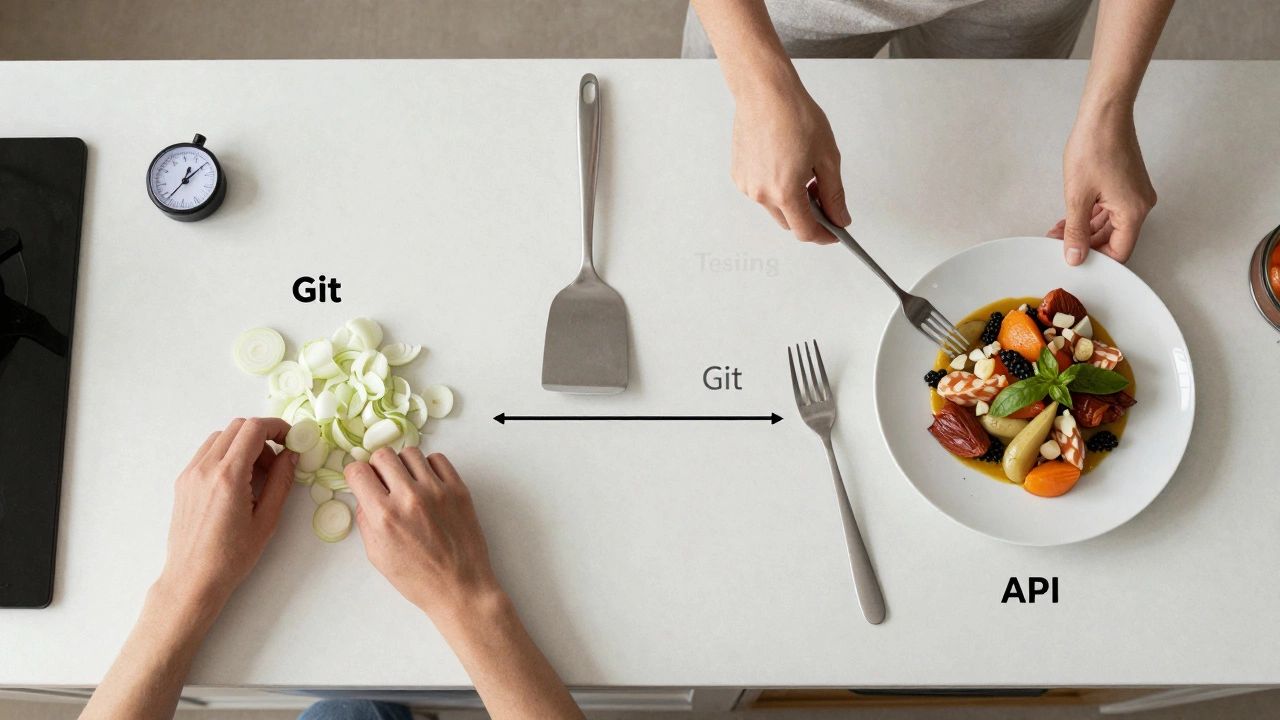
Think of it like cooking. Knowing how to chop onions is coding. Knowing how to balance flavors, time multiple dishes, adjust for different diets, and serve a full meal? That’s programming.
Learn the tool. Then learn the art. The world doesn’t need more typists. It needs builders.
Is coding the same as programming?
No. Coding is writing lines of code in a programming language like Python or JavaScript. Programming is the entire process of designing, building, testing, and maintaining software. Coding is one part of programming - like typing is part of writing a book.
Should I learn coding first before programming?
Yes. Start with coding to learn syntax, basic logic, and how to write simple programs. But don’t stay there. After a few weeks, start building real projects that involve multiple components - databases, APIs, user interfaces. That’s when you start programming.
Do I need a computer science degree to become a programmer?
No. Many successful developers are self-taught. What matters is your ability to solve problems, build working systems, and adapt to new tools. Employers care more about your projects and how you think than your diploma.
What’s the fastest way to go from coder to programmer?
Build something complex. Not just a calculator or todo list. Build an app that uses a database, an API, user authentication, and a front-end interface. Then break it. Fix it. Test it. Repeat. This forces you to think like a programmer, not just a typist.
Why do coding bootcamps focus so much on coding?
Because it’s easier to teach and measure. Writing code in 6 weeks is doable. Teaching system design, debugging, and collaboration takes years. Bootcamps sell "coding" because it sounds quick and achievable. Real programming takes time - and that’s why most grads need months of practice before they’re job-ready.