How to Train Yourself to Speak Fluent English: A Practical Guide
 May, 15 2026
Daily English Fluency Tracker
Consistency is the key to bridging the gap between knowing a language and speaking it fluently. Check off these daily tasks based on the article's methods to build your streak and track your progress toward fluency.
Today's Checklist
Current Streak
Keep going!
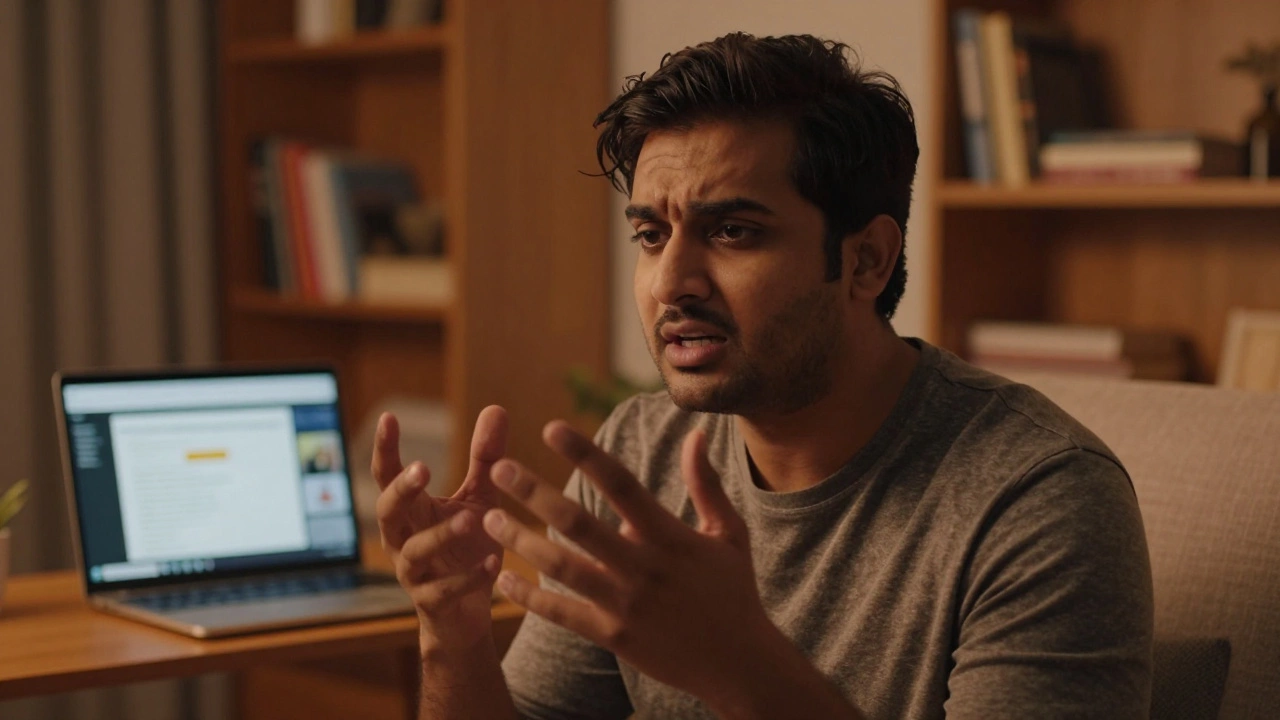
You know the grammar rules. You can read a complex article without stumbling. But when someone asks you a question in real life, your mind goes blank. The words stick in your throat, and suddenly you feel like a beginner again. This is not just you; it is the most common hurdle for millions of learners worldwide. The gap between knowing a language and speaking it fluently is not filled by textbooks alone.
Fluency is not about having a perfect accent or knowing every synonym for 'happy.' It is about speed, confidence, and the ability to connect ideas in real-time. If you want to bridge that gap, you need to treat speaking as a physical skill, much like playing the guitar or running a marathon. It requires consistent, deliberate practice that pushes you out of your comfort zone.
What is the single most effective way to improve speaking?
The most effective method is active output. You must speak English every day, even if it is just talking to yourself. Passive input like watching movies helps, but only speaking builds the neural pathways required for fluency.
The Myth of Perfection and the Power of "Good Enough"
The biggest enemy of fluency is perfectionism. Many learners wait until they have constructed a grammatically flawless sentence before they open their mouths. By the time they finish thinking, the conversation has moved on. This hesitation creates a feedback loop of anxiety. You fear making a mistake, so you speak less, which makes you less comfortable, which increases the fear.
To break this cycle, you need to adopt the concept of "communicative competence." Your goal is not to impress a teacher with perfect syntax; your goal is to transfer an idea from your brain to another person's brain. If they understand you, you have succeeded. Mistakes are data points, not failures. Every time you stumble over a word or use the wrong tense, your brain records that error. When you hear the correct version later, the correction sticks much deeper than if you had never made the mistake at all.
Start lowering your standards for accuracy and raising them for frequency. Aim to speak for three minutes straight without stopping, even if you make five errors. This builds stamina. Over time, your brain will optimize its processes, and the errors will naturally decrease as your confidence rises.
Shadowing: Training Your Mouth Muscle Memory
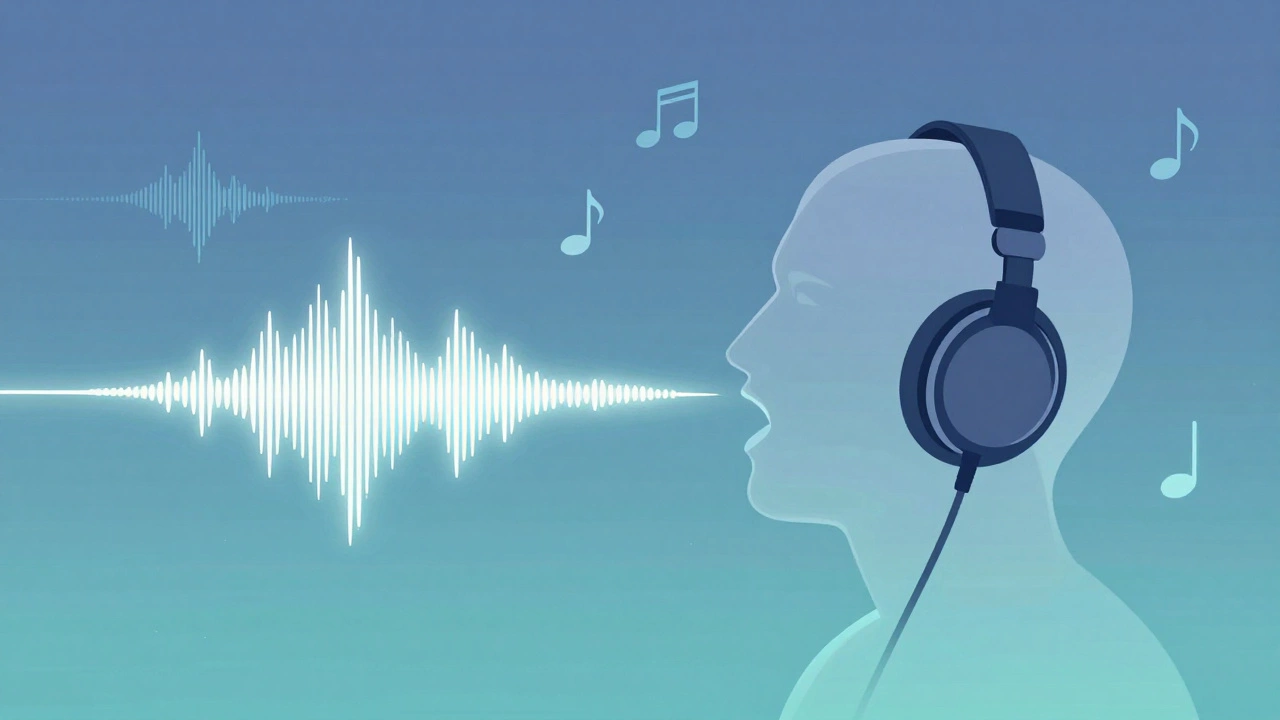
Speaking is a physical act. Your tongue, lips, and jaw need to learn new positions and movements that might not exist in your native language. Reading silently does not help here. You need to train your mouth muscles through a technique called Shadowing, which is a language learning technique where you listen to audio and repeat what you hear almost simultaneously, mimicking the speaker's intonation, speed, and rhythm.
Here is how to do it effectively:
- Find clear audio: Use podcasts, YouTube videos, or audiobooks with native speakers. Choose content that matches your current level-comprehensible but slightly challenging.
- Listen first: Listen to a short segment (10-20 seconds) without repeating. Try to catch the flow, the pauses, and the emotional tone.
- Repeat aloud: Play the audio again and speak along with it. Do not stop the audio. Try to match the speaker’s speed exactly. If they speed up, you speed up. If they pause, you pause.
- Mimic everything: Focus on the music of the language. Where does the voice go up? Where does it go down? Copy these melodic contours.
This technique forces your brain to process language in real-time rather than translating it internally. It bridges the gap between recognition and production. Do this for 15 minutes every day, and within a month, you will notice that your speech flows more naturally and your accent becomes clearer.
Immersion Without Travel: Creating an English Bubble
You do not need to move to London or New York to immerse yourself in English. You can create a digital immersion environment right in your living room. The key is to surround yourself with the language during your downtime, turning passive moments into active learning opportunities.
- Change your device language: Switch your phone, computer, and social media accounts to English. This forces you to learn practical vocabulary related to technology and daily tasks.
- Consume native content: Watch TV shows and movies in English with English subtitles. Avoid subtitles in your native language, as your brain will default to reading instead of listening. Start with sitcoms or vlogs where the language is conversational and contextual clues are strong.
- Follow English influencers: Find YouTubers or bloggers who talk about topics you already enjoy, such as cooking, gaming, or finance. Because you are interested in the topic, you will focus on the message rather than getting stuck on difficult words.
This constant exposure trains your ear to recognize natural speech patterns, including contractions (like "gonna" instead of "going to") and slang. It reduces the cognitive load when you hear native speakers because your brain has already processed these sounds thousands of times.
Thinking in English: Killing the Internal Translator
If you translate thoughts from your native language to English before speaking, you will always be slow. Translation takes time and mental energy. To speak fluently, you must learn to think directly in English. This means associating concepts and objects directly with English words, bypassing your native language entirely.
Start small. Look around your room and name objects in English. As you walk down the street, narrate what you see. "That is a red car." "The sky is cloudy." "I am hungry." This seems simple, but it builds a direct link between observation and English expression.
As you advance, start planning your day in English. Instead of thinking, "I need to buy milk," think, "I need to buy milk." Keep internal monologues in English. When you don't know a word, do not look it up immediately. Describe it using other words. For example, if you forget the word "umbrella," say "the thing you hold to stay dry in rain." This flexibility is a hallmark of fluency. It teaches you to navigate gaps in vocabulary without breaking the flow of communication.
Finding Conversation Partners and Reducing Anxiety
You cannot learn to swim by reading about water. You need to jump in. Finding people to speak with is crucial, but many learners avoid this due to fear of judgment. The good news is that you do not need to find a native speaker immediately. Other learners are excellent partners because they share your struggles and are often more patient.
There are several ways to find conversation partners:
- Language exchange apps: Platforms like Tandem or HelloTalk connect you with people who want to learn your language. You can chat via text, voice notes, or video calls. Offer to help them with your native language in exchange for English practice.
- Online communities: Join Discord servers or Reddit communities dedicated to language learning. Many have voice channels where you can drop in and chat casually.
- Tutoring platforms: Services like iTalki or Preply allow you to hire affordable tutors for casual conversation practice. You can specify that you want "conversation practice" rather than formal lessons, which lowers the pressure.
When you start these conversations, set clear expectations. Tell your partner, "I am practicing my fluency. Please interrupt me if I make a major mistake, but let me finish my thought." This gives you control over the correction process and reduces anxiety. Remember, most people are happy to help if you show genuine interest in their culture or opinions. Ask questions. People love talking about themselves, and this keeps the conversation flowing even if your vocabulary is limited.

The Role of Vocabulary and Collocations
Many learners memorize isolated words, which leads to awkward phrasing. Native speakers do not store words individually; they store chunks of language known as collocations. These are words that naturally go together. For example, we say "make a decision," not "do a decision." We say "heavy rain," not "strong rain."
To sound more fluent, focus on learning phrases rather than single words. When you learn a new verb, learn the nouns it commonly pairs with. Use a corpus tool or a dictionary that shows example sentences. Notice how prepositions attach to verbs. "Wait for," "depend on," "look after." These fixed combinations become automatic over time, freeing up your brain to focus on the structure of your sentence rather than hunting for the right word.
Keep a "phrase journal." Write down interesting expressions you hear in podcasts or conversations. Review them weekly. Try to use each new phrase in a sentence within 48 hours of learning it. This active recall strengthens memory retention far better than passive review.
Tracking Progress and Staying Consistent
Fluency is a marathon, not a sprint. You will have days where you feel like you are regressing. This is normal. Language acquisition happens in plateaus and jumps. To stay motivated, track your progress objectively.
Record yourself speaking once a week. Pick a topic, like "My weekend plans" or "My opinion on remote work," and speak for two minutes. Save the recording. Listen to it after a month. You will likely be surprised by how much smoother your speech has become, even if you didn't feel it happening day-to-day.
Set micro-goals instead of vague ambitions. Instead of "I want to be fluent," set goals like "I will speak English for 10 minutes today" or "I will learn five new collocations this week." Small, consistent wins build momentum. Celebrate these small victories. They prove to your brain that effort yields results.
Common Pitfalls to Avoid
Avoid relying solely on grammar books. Grammar is important, but it is the skeleton, not the flesh. You need vocabulary and practice to bring it to life. Also, avoid comparing yourself to native speakers. Their brains were wired for English from birth. Your brain is building new connections. Be patient with yourself.
Another pitfall is passive consumption. Watching Netflix is fun, but if you are not actively engaging with the language-repeating phrases, looking up words, summarizing plots-it is just entertainment. Make your consumption active. Pause the video. Repeat the dialogue. Summarize what happened in your own words.
Finally, do not ignore pronunciation. While accent is personal, clarity is essential. If your pronunciation is too unclear, listeners will struggle, leading to frustration for both parties. Use shadowing and minimal pair exercises (practicing words that sound similar, like "ship" and "sheep") to improve clarity.
How long does it take to become fluent in English?
There is no fixed timeline, as it depends on your starting level, intensity of study, and consistency. However, with one hour of focused daily practice, most learners see significant improvement in 6 months. True fluency, where you can discuss complex topics effortlessly, may take 1-2 years of consistent effort.
Is it better to study with a tutor or self-study?
A combination of both is ideal. Self-study allows you to absorb vocabulary and grammar at your own pace. Tutors provide necessary feedback, correct persistent errors, and offer real-time conversation practice that self-study cannot replicate.
Can I become fluent without living in an English-speaking country?
Yes. With the internet, you can access native content, find conversation partners globally, and create an immersive environment at home. Discipline and consistency are more important than geography.
What should I do if I get stuck while speaking?
Do not stop. Use circumlocution (describing the word you don't know), ask for clarification, or switch to a simpler word. Keeping the conversation flowing is more important than finding the exact term. You can look up the word later.
Does watching movies help with speaking?
Only if done actively. Passive watching improves listening comprehension. To help speaking, you must shadow the actors, repeat phrases, and analyze the dialogue. Movies are a resource, not a complete solution.