How Many Digital Platforms Are There for E-Learning in 2026?
 Mar, 4 2026
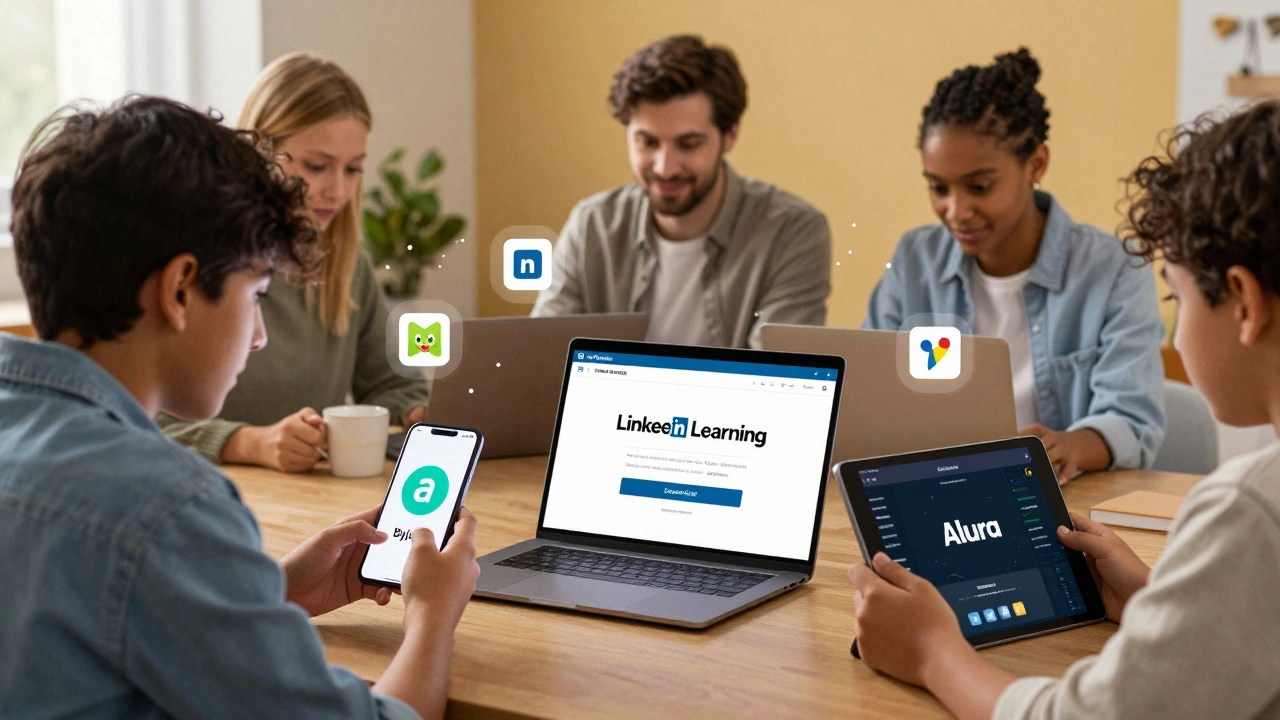
When you think about learning online, you probably picture a few big names: Coursera, Udemy, Khan Academy. But here’s the truth - there are over 1,200 active digital platforms offering e-learning today. That’s not just a few apps or websites. It’s a full ecosystem, with platforms built for corporate training, K-12 students, university degrees, language learners, coding bootcamps, and even niche hobbies like pottery or chess.
Not All Platforms Are Created Equal
Some platforms have millions of users. Others serve just a few hundred people in one country. Some are free. Others cost thousands. And not every one is even a website - some are mobile apps, Slack bots, or AI tutors built into learning management systems.
Let’s break it down by type. The biggest category is massive open online courses (MOOCs). These include Coursera, edX, FutureLearn, and Udacity. They partner with universities and offer certificates, degrees, and professional training. Coursera alone hosts over 7,000 courses from 275+ universities. edX, backed by MIT and Harvard, has over 5,000 courses and even offers micro-masters and full online degrees.
Then there’s the marketplace model. Udemy, Skillshare, and Pluralsight let anyone create and sell courses. Udemy has over 210,000 courses on every topic imaginable - from Python programming to how to train your cat. Skillshare focuses on creative skills like design, writing, and photography, with 4 million paying subscribers. Pluralsight targets tech professionals with structured learning paths for cloud, DevOps, and cybersecurity.
Specialized Platforms Are Growing Fast
More than half of all e-learning platforms now serve specific audiences. For example:
- Khan Academy - free K-12 content in 40+ languages, used by 120 million learners worldwide.
- Duolingo - the most popular language app, with 750 million users and AI-powered lessons in 40+ languages.
- Codecademy - interactive coding lessons for beginners, with over 50 million learners and partnerships with companies like Google and IBM.
- Brilliant - teaches math and science through problem-solving, not lectures, with 7 million users.
- Outschool - live online classes for kids aged 3-18, with 200,000+ teachers offering 100,000+ live sessions monthly.
- MasterClass - celebrity-led courses on cooking, acting, writing, and more, with 3.5 million subscribers.
Then there are the corporate platforms: LinkedIn Learning, Docebo, Cornerstone OnDemand, and SAP Litmos. These aren’t for casual learners. They’re used by Fortune 500 companies to train employees. LinkedIn Learning alone has over 16,000 courses and integrates directly with HR systems.
Regional Players Are Dominating Local Markets
Global platforms get all the attention, but local ones often have deeper reach. In India, Byju’s serves over 50 million students with K-12 and test prep. In China, VIPKid connects kids with native English teachers - it had over 1.5 million students before regulatory changes. In Brazil, Alura is the top tech learning platform, with 2 million users. In Germany, Udemy Business and openHPI are the go-to for professionals.
These platforms aren’t just translations of American tools. They’re built for local curriculums, languages, and learning habits. A student in Lagos might use Learnhub for WAEC prep. A teenager in Jakarta might learn coding on Duniaku. These platforms aren’t on TechCrunch, but they’re changing how millions learn.
Emerging Platforms Are Redefining Learning
2025 and 2026 brought a wave of new platforms powered by AI. ChatGPT Tutor (by OpenAI) lets users ask questions and get step-by-step explanations. Explainable turns textbook chapters into interactive Q&A sessions. NeuroLearn uses brainwave feedback to adjust lesson pacing based on focus levels.
There are also decentralized platforms like LearningDAO, where learners earn tokens for completing courses and can vote on what content gets created. And EdChain, a blockchain-based credentialing system that lets you store your certificates on a public ledger - no more fake diplomas.
Even gaming platforms are entering the space. Classcraft turns classroom learning into a role-playing game. QuizUp lets you compete in real-time quizzes with others globally. These aren’t gimmicks - studies show gamified learning improves retention by up to 60%.
What’s Missing? The Platforms No One Talks About
Most people don’t realize how many platforms are hidden inside apps they already use. YouTube has over 100 million educational videos. Reddit has 500+ learning communities like r/learnpython and r/askscience. Notion and Obsidian are used by millions as personal learning hubs. Even Discord has 12,000+ education servers with tutors, study groups, and live Q&As.
Then there are the nonprofit and government platforms. Khan Lab School (by Khan Academy) offers free hybrid learning. India’s DIKSHA portal serves 250 million students. Canada’s LearnAlberta provides curriculum-aligned content for all public schools. These aren’t flashy, but they’re essential.
Why Does the Number Matter?
It’s not about counting platforms. It’s about choice. With over 1,200 options, you can find a platform that matches your:
- Learning style (visual, hands-on, audio)
- Budget (free, subscription, pay-per-course)
- Goal (get a job, pass an exam, learn a hobby)
- Time zone and language
- Device (phone, tablet, desktop, smart TV)
Some people waste months trying to pick the "best" platform. But there’s no single best. The right one depends on you. A 15-year-old in Nairobi learning biology on a phone with limited data needs a different platform than a 40-year-old in Toronto upgrading to data science.
Instead of asking "Which platform is best?", ask: "What do I need right now?" Then pick one. Try it. If it doesn’t work, try another. That’s how learning works today - not by choosing one perfect tool, but by mixing and matching.
What’s Next?
By 2027, experts predict there will be over 2,000 active e-learning platforms. Why? Because AI is lowering the cost of creating high-quality content. A single teacher can now build a full course in days using tools like Canva, Descript, and AI voice generators. Small platforms are popping up every week.
The real trend isn’t more platforms - it’s more personalization. Platforms are starting to adapt to your brain, your schedule, your mistakes. The future isn’t one platform for everyone. It’s dozens of platforms, each helping you learn in your own way.
How many e-learning platforms are there in total?
There are over 1,200 active e-learning platforms worldwide as of 2026. This includes global giants like Coursera and Udemy, specialized platforms like Duolingo and Codecademy, regional players like Byju’s and Alura, and emerging AI-driven tools. Many more are inactive or private, so the total number of platforms ever created is likely over 2,000.
Are all e-learning platforms free?
No. While some platforms like Khan Academy and YouTube offer free content, most operate on subscription, freemium, or pay-per-course models. For example, Coursera charges $39-$79 per month for course access, while Udemy courses range from $10 to $200. Corporate platforms like LinkedIn Learning cost $30/month, and platforms like MasterClass charge $180/year for unlimited access.
Can I use multiple e-learning platforms at once?
Absolutely. In fact, most successful learners use 3-5 platforms at the same time. For example, someone might use Duolingo for Spanish, Codecademy for Python, YouTube for visual tutorials, Notion to organize notes, and Discord for study groups. Combining platforms lets you get the best of each - structured lessons, community support, and flexible review.
Which platform is best for beginners?
For absolute beginners, Khan Academy (for school subjects), Duolingo (for languages), and Codecademy (for coding) are the most user-friendly. They offer bite-sized lessons, instant feedback, and zero pressure. None require prior knowledge. If you’re unsure where to start, pick one topic and try one platform for 7 days. If it doesn’t click, try another.
Do employers recognize certificates from e-learning platforms?
Yes, but it depends on the platform and the job. Certificates from Coursera, edX, and LinkedIn Learning are widely recognized because they come from accredited universities or industry leaders. Certificates from Udemy or Skillshare are less formal but still valuable if you can show projects or skills. Employers care more about what you can do than the certificate itself - so build a portfolio, not just a list of badges.
Are there e-learning platforms for adults returning to education?
Yes. Platforms like Coursera, edX, and FutureLearn offer degree programs and professional certifications designed for working adults. Many include flexible deadlines, part-time options, and career coaching. Some, like Guild Education, partner with employers to help workers earn credentials while employed. In Canada, platforms like LearnNowBC and OntarioLearn offer affordable, accredited courses for adult learners.