Distance Learning vs. Traditional Classroom: Which Is Right for You?
 Apr, 24 2026
Learning Path Finder
Not sure whether to choose a screen or a desk? Answer these 5 questions to see which learning environment aligns best with your current life stage and personality.
Result Title
Quick Takeaways
- Classroom learning wins on social networking and immediate feedback.
- Distance learning wins on flexibility and cost-effectiveness.
- Hybrid models are becoming the gold standard for professional certifications.
- The choice depends on your self-discipline levels and the subject matter.
The Real Deal on Classroom Education
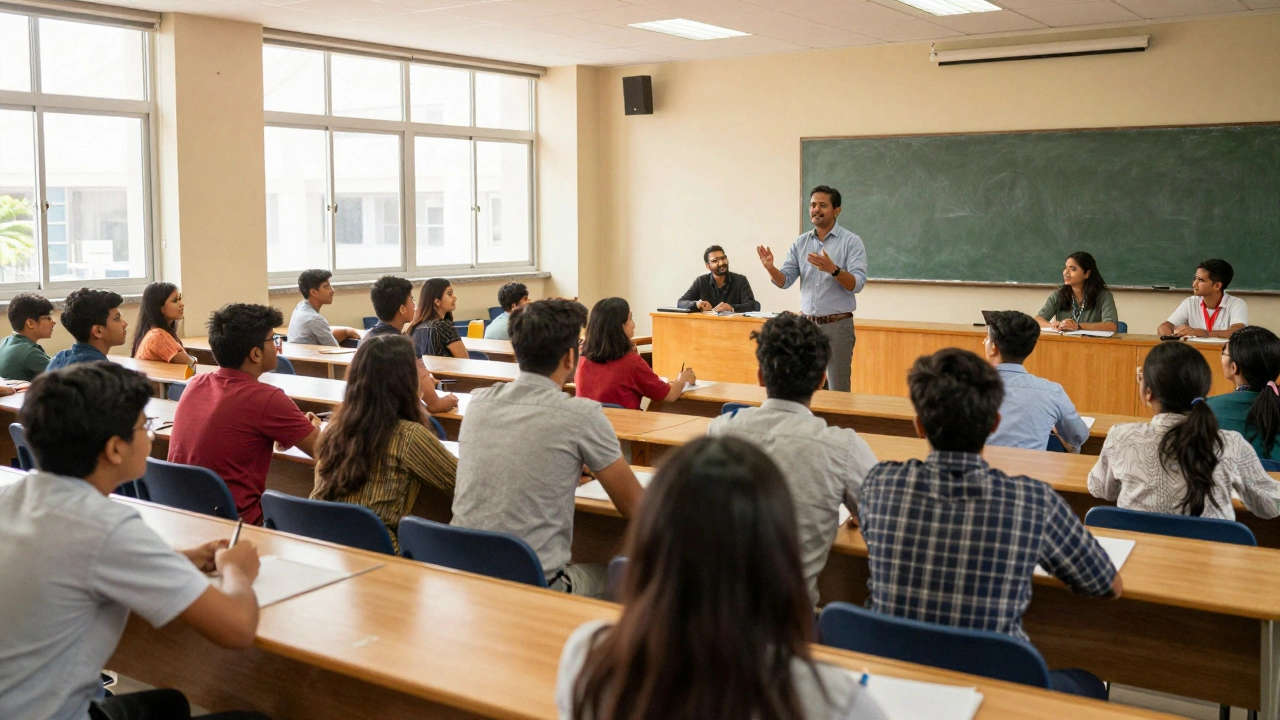
There is something about a physical space that triggers a "learning mode" in our brains. When you walk into a lecture hall, you've left your distractions behind. Traditional Classroom is a synchronous learning environment where students and instructors interact in a shared physical space. This setup relies heavily on non-verbal communication-the teacher's nod, a classmate's confused look, or the sudden energy of a group debate.
In a physical setting, the feedback loop is instant. You don't have to send an email and wait six hours for a response to a question about a complex formula. You just raise your hand. This immediacy reduces the friction of learning, especially in subjects that require tactile work or heavy collaboration. Think about chemistry labs or medical training; you simply cannot replicate the feeling of a pipette or a stethoscope through a Zoom call.
However, the classroom comes with "hidden taxes." There's the commute, the rigid scheduling, and the geographic limitation. If the best professor for your niche lives in another city, you're either moving your entire life or settling for a second-best local option. For many, the social pressure of a classroom is a double-edged sword-it provides accountability, but it can also cause anxiety for those who struggle with public speaking or social dynamics.
Unpacking Distance Learning
Online education has evolved far beyond a few PDFs and a monthly webinar. Distance Learning is a method of education where the student is not physically present in a traditional classroom, often utilizing digital platforms for delivery. It transforms the world into your campus. Whether you're using a Learning Management System (LMS) or a live stream, the core value here is autonomy.
For a working parent or a full-time employee, distance learning isn't just a preference-it's the only viable path to a degree. You can watch a lecture at 11 PM after the kids are asleep or review a difficult module three times without feeling like you're slowing down the rest of the class. This asynchronous nature allows for "deep work," where you can dive into a topic at your own pace without the interruption of a ringing school bell.
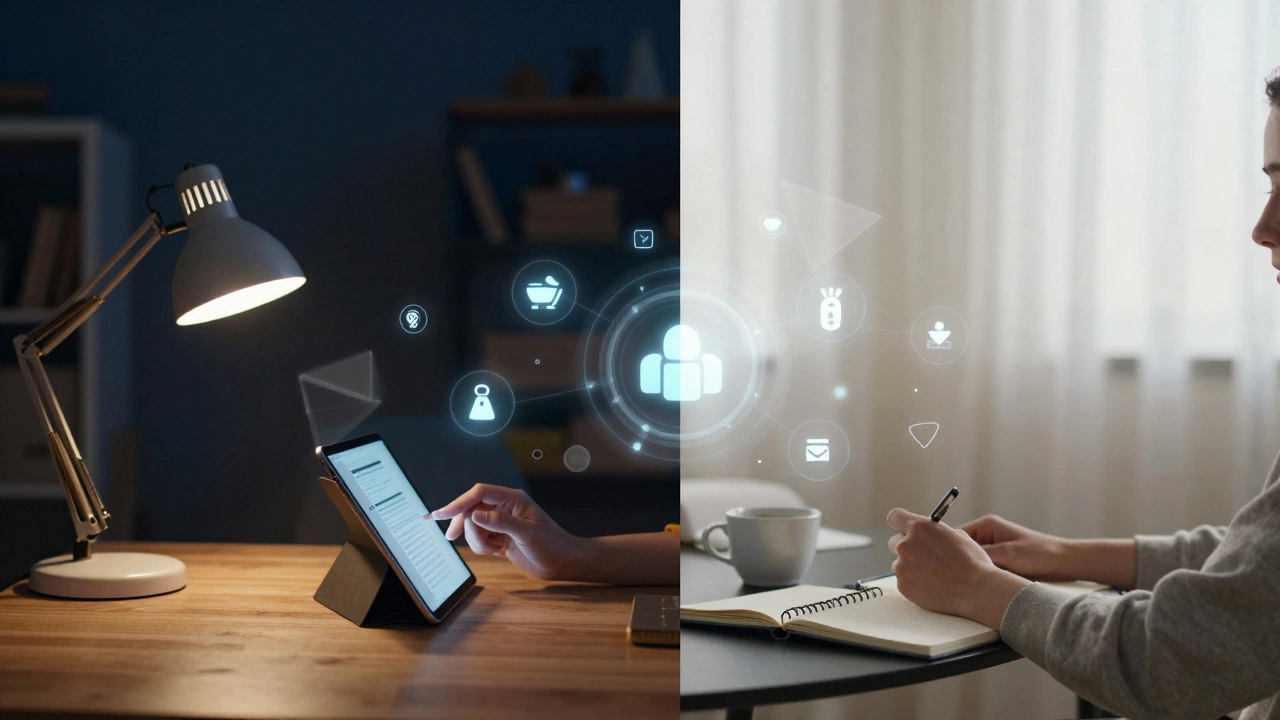
But this freedom requires a specific personality trait: extreme self-discipline. Without a professor physically looking over your shoulder, it is incredibly easy to let a module slide for two weeks. The "digital void" can also feel isolating. You miss out on the "hallway conversations"-those unplanned chats after class where the most interesting ideas often emerge. To succeed here, you have to be your own project manager, setting hard deadlines and creating your own social structures via Discord or Slack.
Comparing the Two: Side by Side
To make a decision, you need to look at the specific trade-offs. It's rarely about the quality of the content, as the same syllabus is often used for both formats. Instead, it's about the delivery mechanism and the cost of acquisition.
| Feature | Traditional Classroom | Distance Learning |
|---|---|---|
| Flexibility | Low (Fixed schedule) | High (Self-paced) |
| Social Interaction | High (Face-to-face) | Medium (Digital/Forums) |
| Cost (Average) | Higher (Commute, Housing) | Lower (No travel, Digital materials) |
| Feedback Speed | Instant | Delayed (Usually email/portal) |
| Discipline Needed | Moderate (External) | Very High (Internal) |
The Role of Technology and Platforms
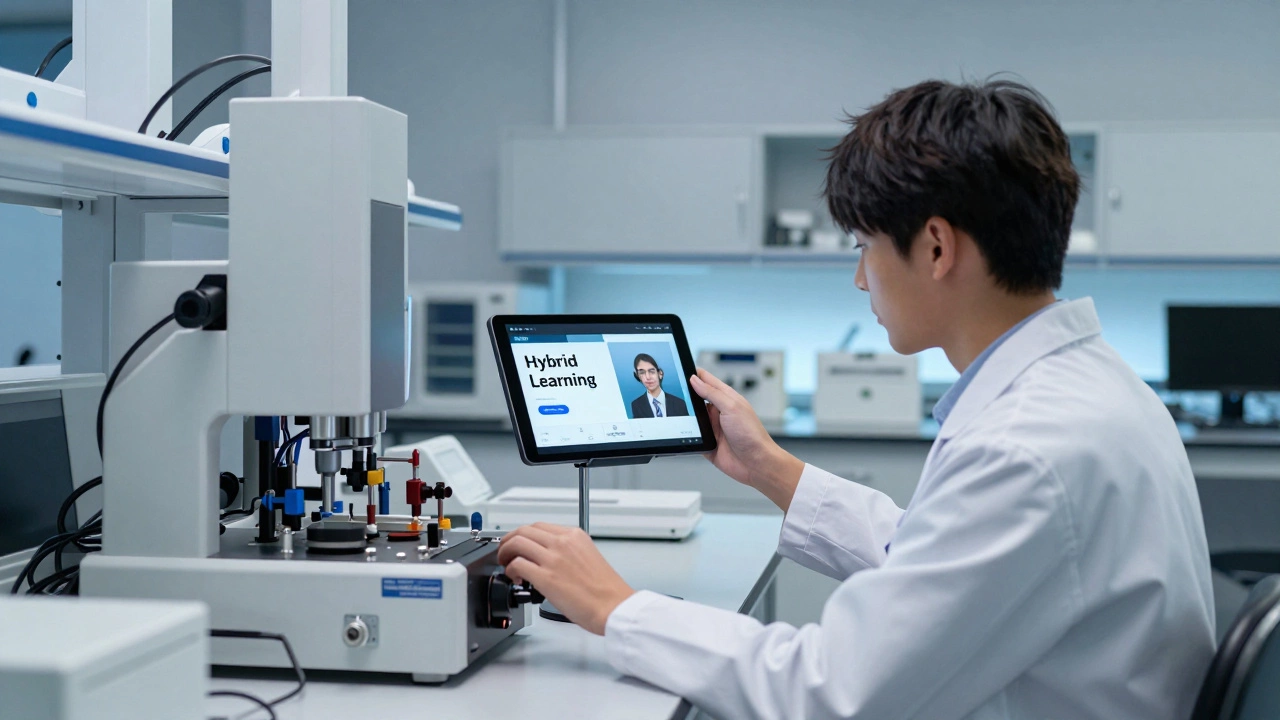
The gap between these two formats is closing thanks to Educational Technology (EdTech). We are seeing the rise of "Hybrid Learning," where you might attend a physical lab once a month but do all your theory work via an online portal. Tools like Canvas or Moodle have standardized how content is delivered, making the digital experience feel more like a structured course and less like a random collection of videos.
Moreover, the integration of AI has changed the game for distance learners. In the past, the lack of a teacher meant you were stuck if you didn't understand a concept. Now, AI-driven tutors can provide instant clarifications, essentially mimicking the "raise your hand" experience of a physical classroom. This removes one of the biggest hurdles of online education: the feeling of being stranded in your studies.
Which One Should You Choose?
If you're trying to decide, ask yourself a few honest questions. Do you struggle to start tasks unless someone is watching you? If yes, go for the classroom. The external structure will save you from procrastination. Do you have a full-time job or a family that requires your presence? Then distance learning is your only realistic option.
Consider the subject matter too. If you are studying Theoretical Physics or History, the medium matters less than the quality of the reading list. However, if you are learning a craft, a surgical technique, or a high-stakes performance art, the physical presence of a mentor is irreplaceable. You can watch a thousand videos on how to weld, but you won't actually know how to weld until you're in a workshop with a real torch.
For those who can't decide, look for a blended approach. Many modern universities now offer a "low-residency" model. This gives you the best of both worlds: the flexibility of online modules for 80% of the course, and intensive 1-week in-person "bootcamps" for the networking and hands-on application. It’s a strategy that acknowledges we need both the efficiency of the internet and the humanity of a handshake.
Is a distance learning degree respected by employers?
Yes, in most industries, the accreditation of the institution matters more than the delivery method. In the tech and business sectors, employers often view distance learning as a sign of strong time-management skills and self-motivation. However, for fields like medicine or nursing, physical clinical hours are non-negotiable.
How do I stay motivated with online classes?
Treat your learning like a job. Set a fixed schedule, create a dedicated workspace that is separate from where you relax, and join a study group. Using tools like Trello or Notion to track your progress can also provide the visual satisfaction of completion that you normally get from ticking off a physical syllabus.
Is distance learning cheaper than traditional learning?
Generally, yes. While tuition can be similar, you save significantly on transit, parking, campus housing, and expensive physical textbooks. Many online programs also allow you to work full-time while studying, meaning you don't lose out on income while earning your degree.
Can you really network in an online environment?
It is harder, but not impossible. You have to be more intentional. Instead of waiting for a chance encounter in the hallway, you should proactively schedule 15-minute "virtual coffees" with your classmates and professors. Active participation in discussion forums is also a great way to get noticed by peers and instructors.
What are the biggest risks of distance learning?
The biggest risks are isolation and burnout. Without the social cues of a campus, it's easy to feel lonely or overwhelmed by the digital workload. There is also the risk of encountering low-quality programs that offer "degrees" with no real academic rigor. Always check for regional or national accreditation before signing up.
Next Steps for Your Learning Journey
If you're still on the fence, start small. Don't commit to a four-year degree immediately. Try a short certification on a platform like Coursera or edX to see if you can handle the self-paced nature of online work. If you find yourself drifting or ignoring the notifications, you'll know that a structured, physical classroom is where you'll actually thrive.
For those choosing the classroom, look into the campus culture and the specific facilities. If the lab equipment is twenty years old, the "physical advantage" disappears. For those going digital, audit your home environment. Do you have a quiet corner and a reliable internet connection? If not, consider a local library or a coworking space to recreate that "learning zone" feeling.