Best Online Learning Platforms for 2026: Find Your Perfect Fit
 Apr, 21 2026
Learning Platform Matchmaker
Not sure where to start? Answer a few questions to find the platform that matches your current learning objective.
What is your primary goal for learning?
Your Perfect Match!
Platform Name
Value level
Pricing info
Quick Summary: Which one should you pick?
- Coursera: Best for university-backed certificates and degrees.
- Udemy: Best for specific, practical skills and affordable, one-off courses.
- LinkedIn Learning: Best for corporate professional development and networking.
- edX: Best for rigorous academic learning and open-source university content.
- Skillshare: Best for creative arts, design, and hobbyist projects.
Matching the Platform to Your Goal
Before you hit the 'enroll' button, you need to be honest about why you're here. Are you trying to pivot your career into data science, or do you just want to learn how to use Adobe Illustrator for a side project? If you pick a platform that doesn't align with your end goal, you'll likely end up with a half-finished course and a sense of guilt. For those seeking institutional credibility, Coursera is a massive open online course (MOOC) provider that partners with top-tier universities like Stanford and Yale. If you need a credential that an HR manager at a Fortune 500 company recognizes, this is where you start. However, if you just want to know how to build a Shopify store by tomorrow morning, a formal university track is overkill. That's where Udemy comes in. Unlike the academic rigor of MOOCs, Udemy is a marketplace where independent experts sell courses directly to students. It's the "Wild West" of learning-some courses are gold, others are outdated, but the variety is unmatched.The Deep Dive: Comparing the Heavy Hitters
When we talk about the best learning platform, we have to look at the actual mechanics of how you learn. Some platforms use a "push" model where they guide you through a curriculum, while others are "pull" models where you search for exactly what you need.| Platform | Primary Focus | Certification Value | Pricing Model | Best For |
|---|---|---|---|---|
| Coursera | Academic/Professional | High (University) | Subscription/Per Course | Career Pivoters |
| Udemy | Practical/Technical | Low to Medium | One-time Purchase | Quick Skill Gains |
| LinkedIn Learning | Business/Soft Skills | Medium (Industry) | Monthly Subscription | Corporate Climbers |
| edX | Rigorous Academic | Very High | Freemium/Paid Certs | Deep Theory |
| Skillshare | Creative/Artistic | Low (Portfolio based) | Annual Subscription | Creatives |
The Academic Route: Coursera vs. edX
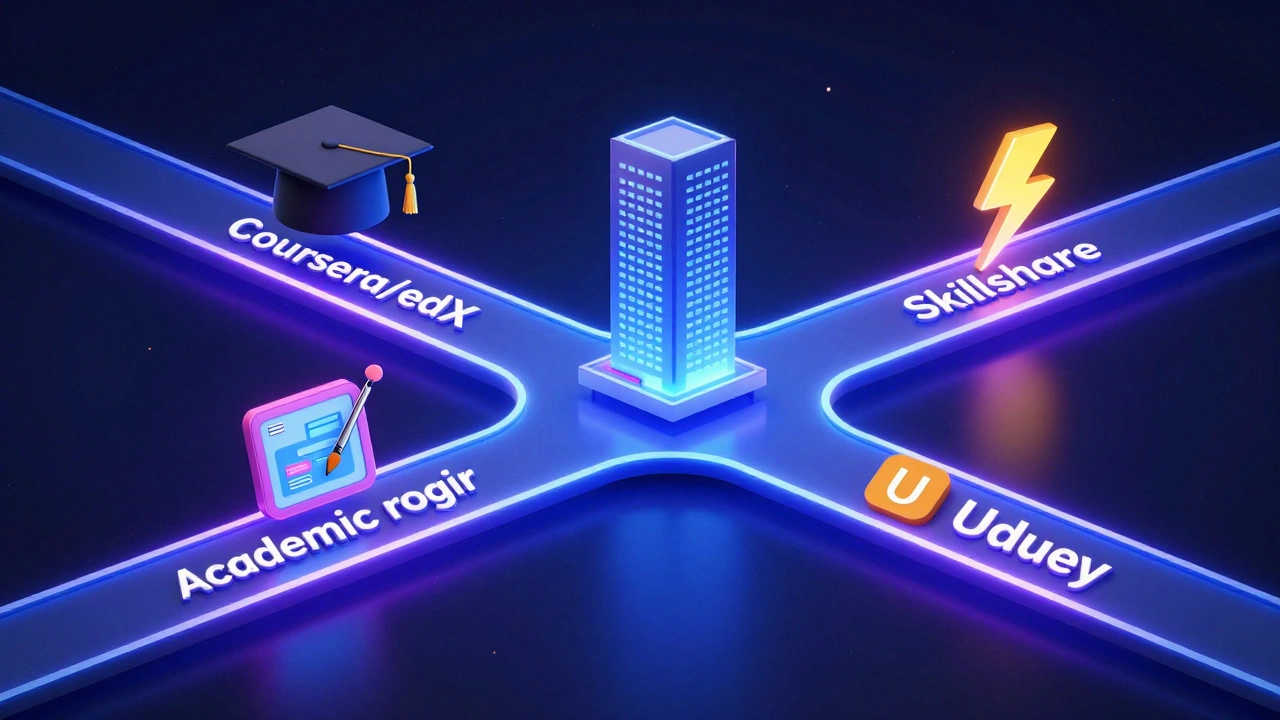
If you're looking for something that feels like a real classroom, you're choosing between Coursera and edX. While they look similar, the vibe is different. edX was founded by Harvard and MIT and tends to lean more toward the "open" side of education. They often provide a massive amount of content for free, only charging you if you want the verified certificate. Coursera has shifted more toward "Professional Certificates" designed with companies like Google and IBM. This is a strategic move to bridge the gap between a degree and a job. For example, if you take the Google Data Analytics Professional Certificate, you aren't just learning theory; you're learning the specific tools Google expects its employees to use. The trade-off? It's often more expensive and the subscription model can be a trap if you don't finish the course quickly.The Practical Sprint: Udemy and Skillshare
Now, let's talk about the platforms where you don't need a syllabus. Udemy is essentially the YouTube of paid education. You can find a course on literally anything-from underwater welding to advanced Python programming. The key here is the rating system. Because anyone can upload a course, you have to be a detective. Check the "last updated" date. If you're learning a software tool and the course hasn't been updated in six months, skip it. Software changes too fast for old tutorials to be useful. On the other hand, Skillshare is where you go when you want to *make* something. It's less about passing a test and more about completing a project. If you want to learn digital illustration or urban sketching, Skillshare's community-focused approach is better. You don't get a formal certification, but you get a portfolio of work, which is the only currency that actually matters in the creative world.The Corporate Ladder: LinkedIn Learning
For the 9-to-5 crowd, LinkedIn Learning (formerly Lynda.com) is a powerhouse. The biggest advantage here is integration. When you finish a course on "Strategic Leadership," it pops up directly on your professional profile. This is a subtle but powerful signal to recruiters that you are actively improving your skills. However, the content is often "safe." It's great for soft skills, project management, and basic software training, but it won't give you the deep, technical mastery you'd find in a specialized bootcamp or an edX master's track. It's a tool for maintenance and incremental growth, not necessarily for a total identity shift in your career.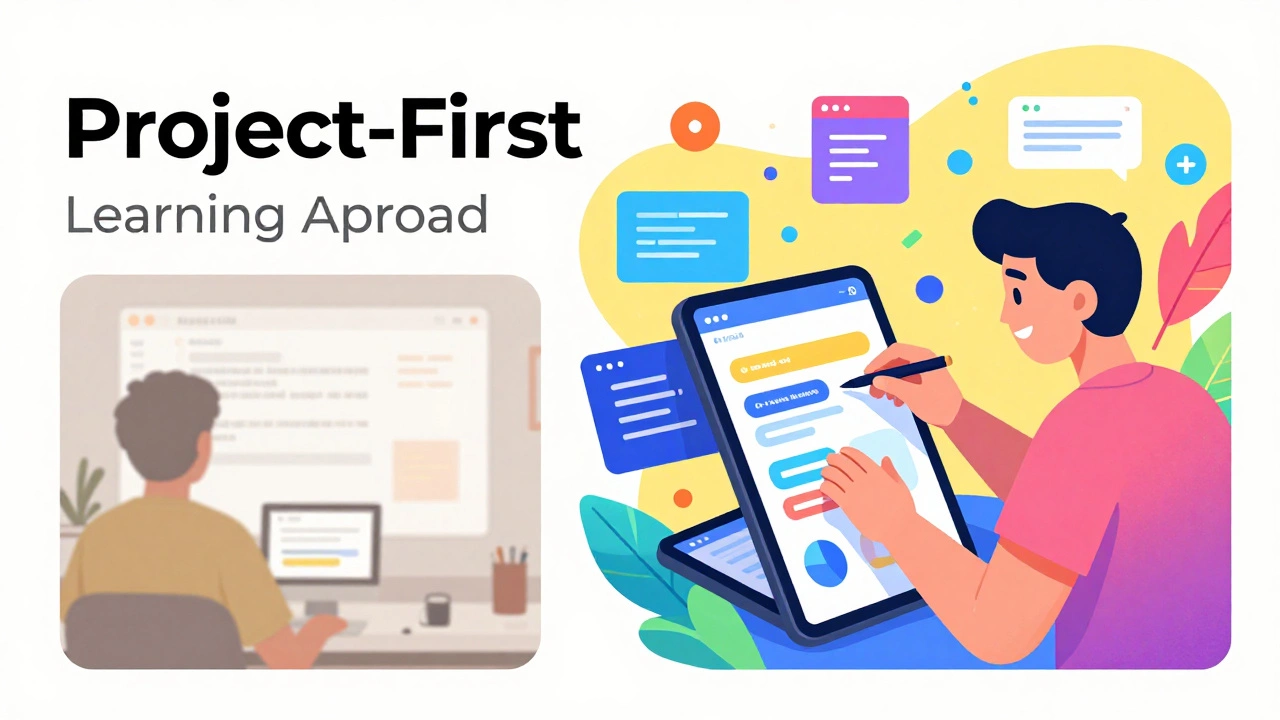
Avoiding the "Course Trap"
Here is a hard truth: buying a course is not the same as learning. There is a psychological phenomenon called "completion bias" where we feel a hit of dopamine just for finishing a video, even if we couldn't apply the knowledge in the real world. To actually get your money's worth, you need a system. First, use the "Project-First" approach. Instead of watching ten hours of videos on React.js, decide on a small app you want to build. Then, only watch the videos that help you solve the immediate problem you're facing. This transforms the learning from passive consumption to active problem-solving. Second, be wary of the "Lifetime Access" marketing. Most people never return to a course after the first three months. If you're choosing between a $200 lifetime course and a $30 monthly subscription, the subscription is often better because it forces a deadline. You have a financial incentive to finish the material before the next billing cycle.Which One Should You Choose?
If you're still undecided, ask yourself what you want to show for your effort at the end. If you want a piece of paper from a university to put on a resume, go with Coursera or edX. If you want to solve a specific problem or learn a hobby quickly and cheaply, Udemy is your best bet. If you're already in a corporate job and want to look better to your boss, LinkedIn Learning is the way to go. And if you just want to paint a better digital portrait or design a logo, Skillshare is the place.Are online course certificates actually valued by employers?
It depends on the source. Certificates from university-backed platforms like Coursera or edX carry more weight because they imply a certain level of academic rigor. Industry-recognized certificates (like those from Google or Microsoft) are highly valued for technical roles. However, a certificate from a random instructor on Udemy is rarely enough on its own; for those, you need a portfolio of projects to prove you actually know the material.
Which platform is the cheapest for beginners?
Udemy is often the cheapest if you catch their frequent sales, where courses drop to $10-$15. For a totally free experience, edX offers many courses in "audit" mode, meaning you can access all the learning materials for free, though you won't get a certificate unless you pay at the end.
How do I know if a course is high quality?
Don't just look at the star rating. Look for the "critical" reviews-the 3-star and 4-star ones. They usually tell you exactly what's missing or if the audio quality is poor. Also, check the date of the last update. In tech and marketing, a course from 2023 might already be obsolete.
Can I get a full degree online through these platforms?
Yes, Coursera and edX partner with universities to offer fully accredited Bachelor's and Master's degrees. These are legitimate degrees, but they are significantly more expensive than individual certificates and require a formal application process, much like a traditional college.
Is Skillshare better than YouTube for learning?
YouTube is great for quick fixes, but Skillshare provides structured paths. Instead of searching through random clips, you get a curated series of lessons designed to take you from point A to point B. Plus, the community feedback on projects helps you improve faster than watching videos in isolation.