Who Cracked IIT Without Coaching? Real Stories, Strategies, and Self-Study Secrets
 May, 29 2026
Self-Study Suitability Analyzer
Walk into any tuition center in Kota, India, and you will hear the same story repeated a thousand times. You need a coach. You need a schedule. You need to spend your weekends solving mock tests until your eyes blur. The industry is built on fear-the fear that if you don't pay for guidance, you will fail. But then there are the outliers. The students who walked into the exam hall with no classroom teachers, no expensive modules, and still secured a single-digit rank at the Indian Institutes of Technology (IIT). Who are these people? How did they do it? And more importantly, can you replicate their success?
The short answer is yes. It happens every year. While coaching institutes dominate the narrative, a significant number of top rankers in the Joint Entrance Examination (JEE) Advanced prepare entirely on their own. They are not magic; they are just disciplined. They treat their preparation like a startup project rather than a school assignment. If you are considering ditching the classroom model, you need to understand exactly how these self-taught students operate.
Can I really crack IIT JEE without joining a coaching institute?
Yes, absolutely. Thousands of students qualify for IITs through self-study every year. Success depends less on the method of learning (classroom vs. self) and more on consistency, resource selection, and self-discipline. Many top rankers prefer self-study because it allows them to learn at their own pace and focus deeply on weak areas without being dragged by a class average.
The Profile of a Self-Taught Toper
When we look at the data from past years, a pattern emerges among those who cracked IIT without coaching. They are rarely the students who struggled in school. In fact, most of them were already strong performers in their board exams. They had a solid foundation in mathematics and science concepts before they even started preparing for JEE specifically.
Consider the case of many recent toppers who shared their journeys online. They didn’t start from zero. They understood calculus intuitively or had a knack for physics problems from an early age. This isn't to say you need to be a genius. It means you need a baseline. If you find basic algebra confusing, jumping straight into advanced JEE mechanics without help might be risky. However, if you grasp concepts quickly but hate the rigid pace of a classroom, self-study is your golden ticket.
These students also share a psychological trait: autonomy. They don’t wait for a teacher to tell them what to study next. They diagnose their own weaknesses. If they get a question wrong in thermodynamics, they don’t just move on. They go back, read the theory again, solve ten more similar problems, and only then proceed. This level of introspection is hard to teach in a crowded lecture hall.
The Resource Stack: What They Use Instead of Classes
If you remove the coaching institute, you must replace its resources. You cannot simply "read books." You need a structured stack of materials that covers theory, practice, and evaluation. Here is the typical toolkit used by successful self-learners.
| Resource Type | Primary Examples | Purpose |
|---|---|---|
| NCERT Textbooks | Class 11 & 12 Physics, Chemistry, Math | Building conceptual clarity and mastering fundamentals, especially for Chemistry and JEE Main. |
| Standard Reference Books | H.C. Verma (Physics), O.P. Tandon (Chemistry), R.D. Sharma (Math) | Deepening understanding and solving intermediate-level problems. |
| Advanced Problem Solvers | I.E. Irodov (Physics), M.L. Khemka (Chemistry), Cengage Series (Math) | Tackling high-difficulty questions typical of JEE Advanced. |
| Previous Year Questions (PYQs) | Last 40 years of JEE Main and Advanced papers | Understanding exam patterns, difficulty levels, and recurring themes. |
| Online Platforms | Khan Academy, Unacademy (free content), YouTube channels | Filling specific conceptual gaps when stuck on a topic. |
Notice that NCERT is non-negotiable. Many self-studiers skip this, thinking it’s too easy. That is a mistake. For Chemistry, especially Inorganic and Organic, NCERT is the bible. For Physics and Math, it builds the intuition you need before tackling harder books. A self-taught student uses NCERT as the base layer, then adds reference books like H.C. Verma for application, and finally moves to specialized problem sets for speed and accuracy.
The Strategy: Discipline Over Motivation
Motivation gets you started; discipline keeps you going. In a coaching center, the environment forces you to show up. At home, nothing forces you. This is where most self-learners fail. They plan to study six hours a day but end up studying two. To crack IIT without coaching, you need a system that removes the need for willpower.
Create a fixed timetable. Not a vague "study in the morning" plan, but a precise schedule. For example: 6:00 AM to 8:00 AM is for Physics theory. 8:00 AM to 9:00 AM is breakfast and break. 9:00 AM to 11:00 AM is for solving problems. Stick to this religiously. Treat your study time like a job. You wouldn’t skip work because you felt lazy, so don’t skip study sessions.
Another critical strategy is active recall. Don’t just re-read your notes. Close the book and try to explain the concept out loud. If you can’t explain Newton’s Second Law to an imaginary five-year-old, you don’t understand it well enough. Write down formulas from memory. Solve problems without looking at the solution first. This active engagement cements knowledge far better than passive reading.
Handling Doubts: The Biggest Challenge
The biggest disadvantage of self-study is the lack of immediate feedback. In a class, you raise your hand, ask a question, and get an answer. At home, you might stare at a problem for three hours without progress. How do self-taught toppers handle this?
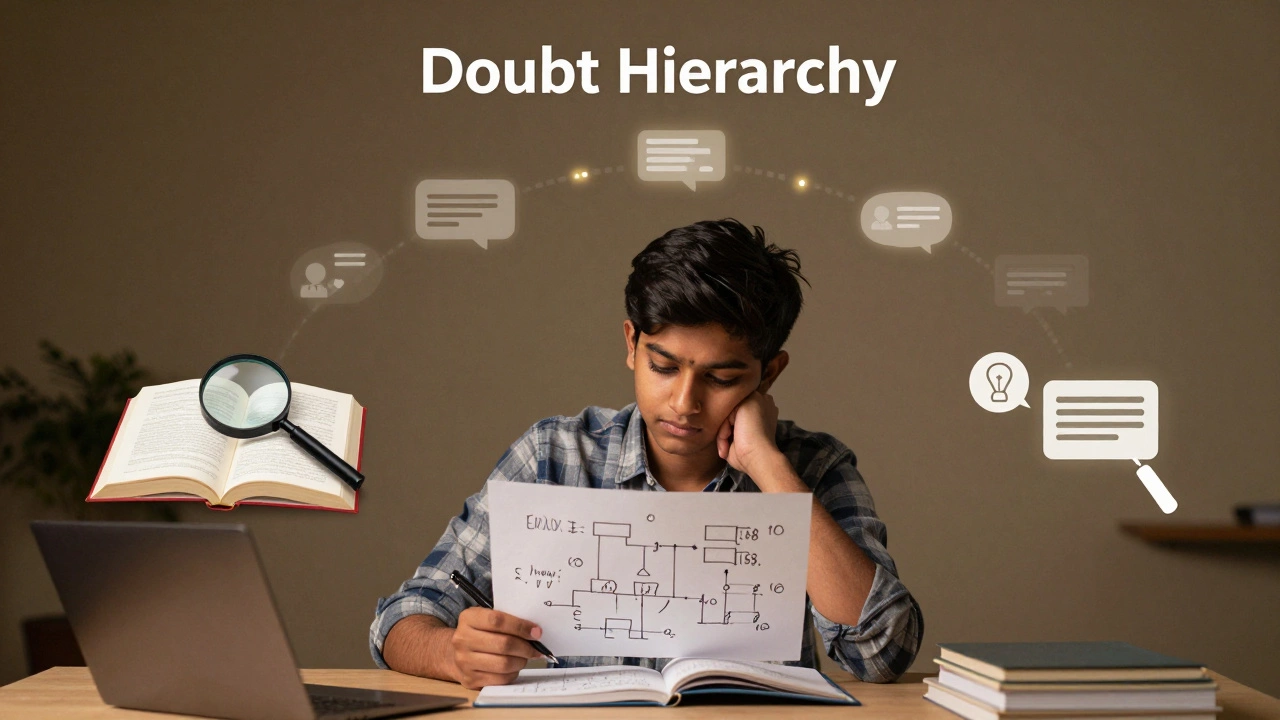
They use a "doubt hierarchy." First, they try to solve it themselves using different approaches. Second, they check the solution key, but only after exhausting their own efforts. Third, if the solution doesn’t make sense, they turn to online resources. There are countless forums, YouTube tutorials, and Discord communities dedicated to JEE preparation. Posting a specific doubt on these platforms often yields detailed explanations within hours.
You can also form a small study group with one or two other serious self-learners. Discussing problems with peers helps clarify misconceptions. Teaching a concept to a friend is one of the best ways to master it yourself. Just ensure your study partners are equally committed, or the group will become a distraction.
Mock Tests: Your True Teachers
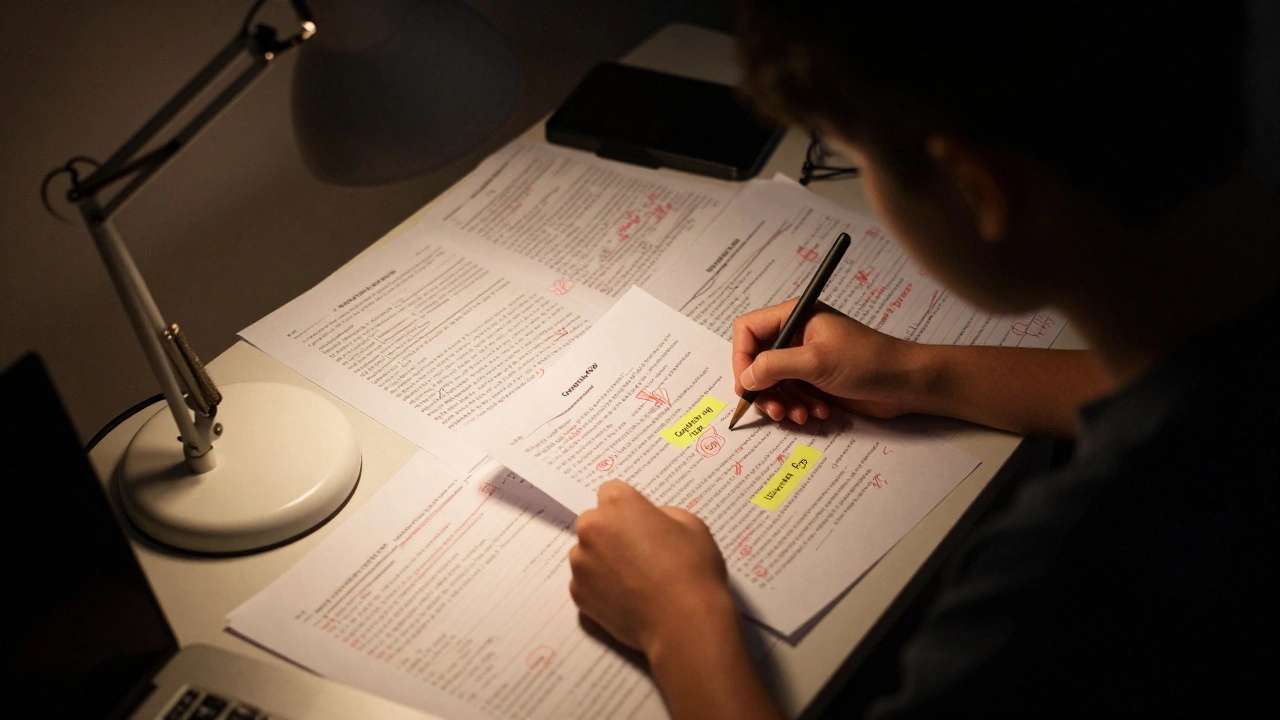
If coaching provides structure, mock tests provide reality checks. You cannot prepare for JEE Advanced without taking full-length simulated exams. These tests serve three purposes: they build stamina, they reveal weak areas, and they reduce anxiety.
Start taking mock tests once you have covered at least 50% of the syllabus. Initially, you might score low. That is normal. The goal is not the score; it is the analysis. After each test, spend twice as much time analyzing your performance as you did taking the test. Why did you get a question wrong? Was it a conceptual gap? A calculation error? Or did you run out of time?
Categorize your mistakes. If you keep making silly errors in integration, you need to practice mental math and careful notation. If you struggle with electrostatics, you need to revisit the theory. Mock tests are diagnostic tools. Use them to refine your strategy, not to judge your intelligence.
Is Self-Study Right for You?
Self-study is not for everyone. It requires a high degree of maturity, self-awareness, and resilience. Ask yourself these questions:
- Do I stay focused when working alone for long periods?
- Am I comfortable seeking help online when I’m stuck?
- Do I have the discipline to follow a strict schedule without external pressure?
- Am I willing to admit my mistakes and correct them immediately?
If you answered yes to most of these, self-study could be your path to IIT. If you struggle with procrastination or feel lost without constant supervision, a hybrid approach might work better. Join a test series or take occasional doubt-clearing sessions while maintaining your primary self-study routine.
Remember, the IIT JEE does not care how you prepared. It only cares about your ability to solve complex problems under pressure. Whether you learned from a guru in a classroom or from a book in your bedroom, the result is what matters. Focus on the quality of your effort, not the source of your education.
What is the best book for self-study in Physics for IIT JEE?
For building concepts, H.C. Verma's "Concepts of Physics" is widely regarded as the gold standard for self-learners. It explains theories clearly and provides problems that range from basic to challenging. For advanced practice, I.E. Irodov's "Problems in General Physics" is excellent but should only be attempted after mastering the basics.
How many hours should I study daily for IIT JEE without coaching?
Quality matters more than quantity. Most successful self-taught students study between 6 to 8 hours of focused, distraction-free time daily. However, consistency is key. Studying 6 hours every day is far better than studying 12 hours for three days and then burning out.
Can I rely solely on NCERT for IIT JEE Advanced?
No. NCERT is essential for JEE Main and for building foundations in Chemistry, but it is insufficient for JEE Advanced. Advanced requires deeper problem-solving skills and application of concepts that go beyond NCERT. You must supplement NCERT with standard reference books and previous year papers.
How do I stay motivated during self-study?
Motivation fluctuates, so rely on habits. Set small, achievable weekly goals. Track your progress visually. Reward yourself for completing milestones. Connect with online communities of fellow aspirants to share experiences and stay accountable. Remember your 'why'-the reason you want to join IIT.
Should I join a test series if I am self-studying?
Yes, highly recommended. A good test series provides simulated exam conditions, detailed performance analysis, and all-India ranking. This helps you gauge your standing among competitors and identify areas needing improvement. It bridges the gap between self-study and competitive readiness.