What Is Vocational Education Called Now? The Rise of CTE and TVET
 Jul, 10 2026
Educational Pathway Analyzer
Select an educational pathway to analyze its characteristics compared to traditional models.
Career & Technical Education (CTE)
North American standard focusing on academic + technical skills.
High DemandTVET (Global Standard)
International model emphasizing apprenticeships and training.
Earn While You LearnTraditional University
Theoretical knowledge, critical thinking, and broad academic study.
Long-term CeilingPathway Analysis
Key Metrics Comparison
Strategic Advantages
Remember when you heard "trade school" or "vocational training" in the past? It often carried a stigma. It was seen as the backup plan for students who didn't make it into university. But if you walk through any high school or community college today, that narrative has completely flipped. The old terms are fading out, replaced by names that sound more professional, modern, and aligned with the future of work.
If you are looking up vocational education today, you will find it is rarely called that anymore. Instead, you will see acronyms like CTE, TVET, or phrases like "applied learning." This isn't just a marketing rebrand; it reflects a massive shift in how society values hands-on skills. Let's break down exactly what these new names mean, why they matter, and how this change affects your career choices in 2026.
The Shift from "Vocational" to Career and Technical Education (CTE)
In the United States and many parts of North America, the term that has largely replaced "vocational education" is Career and Technical Education, commonly known as CTE. This shift happened gradually over the last two decades but accelerated significantly after the pandemic exposed labor shortages in skilled trades.
Why the name change? "Vocational" implies preparing someone for a single, specific job-like becoming a welder or an electrician. While that is still part of it, CTE is broader. It combines academic knowledge with technical skills. A student in a CTE program might study math and physics while simultaneously learning how to repair HVAC systems. The goal isn't just to get a job; it's to build a career pathway that allows for advancement, entrepreneurship, and further education.
For example, a CTE program in healthcare doesn't just teach you how to draw blood. It covers anatomy, medical ethics, data privacy laws, and patient communication. This holistic approach makes CTE programs attractive to a wider range of students, including those who were previously destined for four-year universities but now see the value in debt-free, high-demand careers.
TVET: The Global Standard
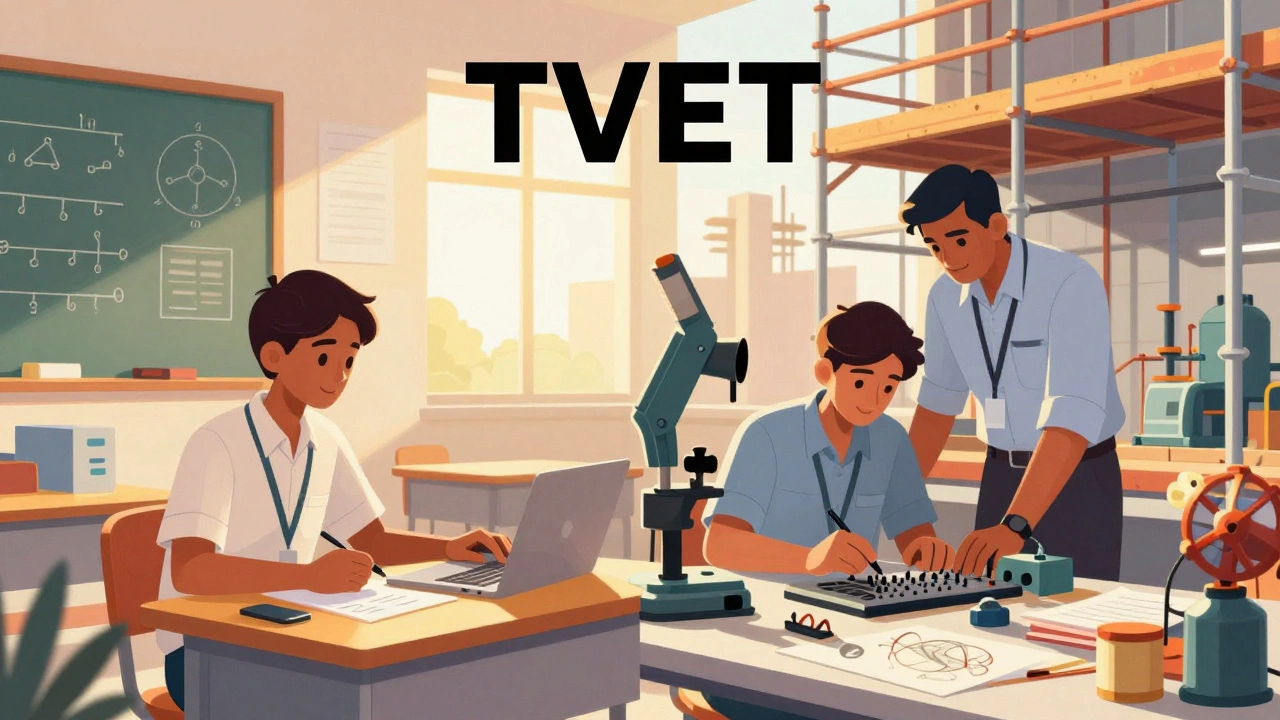
If you look outside North America, particularly in Europe, Asia, and Australia, you will encounter another acronym: TVET, which stands for Technical and Vocational Education and Training. This term is widely used by international organizations like the World Bank and UNESCO.
TVET emphasizes the "training" aspect alongside education. In countries like Germany and Switzerland, this system is deeply integrated into the national economy through apprenticeships. Students spend part of their week in a classroom and the rest on the job, earning a salary while they learn. This model has produced some of the most highly skilled workforces in the world, particularly in manufacturing, engineering, and precision mechanics.
In 2026, as automation takes over routine cognitive tasks, the demand for human dexterity and problem-solving in physical environments is rising. TVET systems are adapting by incorporating digital literacy into traditional trades. An apprentice carpenter today might also learn to use Building Information Modeling (BIM) software, blending old-world craftsmanship with new-world technology.
Other Modern Terms You Will Encounter
Beyond CTE and TVET, several other terms have emerged to describe different facets of non-traditional higher education. Understanding these distinctions can help you navigate the landscape more effectively.
- Applied Learning: This term is popular in community colleges and liberal arts institutions. It suggests that the education is practical and immediately usable. Unlike theoretical degrees, applied learning focuses on solving real-world problems.
- Skilled Trades: While not an educational institution itself, this term has become a powerful brand. When people say they are "going into the trades," they refer to occupations like plumbing, electrical work, and construction management. These roles often require licensure rather than a degree.
- Workforce Development: This term is often used by government agencies and non-profits. It refers to programs designed to help existing workers upgrade their skills or transition into new industries. For instance, a factory worker retraining for renewable energy installation would participate in workforce development.
- Micro-credentials and Bootcamps: In the tech sector, vocational education has evolved into short, intensive courses. Coding bootcamps, for example, offer job-ready skills in web development or data analysis in as little as 12 weeks. These are often referred to as micro-credentials because they certify specific competencies rather than broad academic knowledge.
Why the Rebranding Matters for Employers
The change in terminology is not just about sounding fancy. It signals a fundamental shift in hiring practices. For years, employers defaulted to requiring bachelor's degrees for jobs that did not necessarily need them. This created a "degree inflation" problem, where candidates were overqualified on paper but under-skilled in practice.
Today, companies are increasingly adopting "skills-based hiring." They care less about where you went to school and more about what you can do. CTE and TVET graduates are often preferred because they arrive at the workplace with hands-on experience. An employer hiring a CTE graduate in cybersecurity knows that person has likely already handled network configurations and vulnerability assessments during their training.
This shift reduces the risk for employers. Instead of paying for six months of on-the-job training for a generic business graduate, they can hire someone who is productive from day one. As a result, partnerships between businesses and CTE programs are growing. Companies are co-designing curricula to ensure that students learn the exact tools and technologies used in the industry.
Comparing Traditional Paths: University vs. CTE/TVET
| Feature | Traditional University Degree | CTE / TVET Programs |
|---|---|---|
| Duration | 4+ years | 6 months to 2 years |
| Average Cost | High (often $30k-$150k+ debt) | Low to Moderate (often subsidized) |
| Focus | Theoretical knowledge, critical thinking | Practical skills, immediate job readiness |
| Earning Potential | Higher long-term ceiling for certain fields | Quick entry to middle-income wages |
| Flexibility | Less flexible schedule | Often offers evening/weekend classes |
As shown above, CTE and TVET programs offer a faster route to employment. However, it is important to note that this does not mean university degrees are obsolete. Fields like medicine, law, and advanced research still require extensive academic study. The key is matching the educational path to the career goal. If you want to be a nurse practitioner, you need a university degree. If you want to be a dental hygienist, a CTE program is often sufficient and more cost-effective.

Navigating the New Landscape: Tips for Students
If you are considering a career in a skilled trade or technical field, here are some steps to take advantage of the modern vocational education system.
- Look Beyond the Name: Don't let the word "vocational" scare you off. Look for programs labeled CTE, applied sciences, or professional studies. Check if they are accredited by industry bodies, not just educational authorities.
- Seek Apprenticeships: In many regions, apprenticeships allow you to earn while you learn. Search for registered apprenticeship programs in your area. These are often sponsored by unions or large corporations.
- Check for Stackable Credentials: Modern CTE programs often offer stackable certificates. This means you can start with a basic certificate, enter the workforce, and then add more credits to earn an associate degree or specialized certification later without starting over.
- Investigate Financial Aid: Many people assume financial aid is only for universities. In reality, Pell Grants and other forms of aid are available for eligible CTE and TVET programs. Always ask the financial aid office about vocational-specific scholarships.
- Connect with Local Industries: Talk to local employers. Ask them what certifications they value. For example, in Canada, Red Seal endorsements are crucial for interprovincial mobility in trades. Knowing these specifics can save you time and money.
The Future of Work and Skills-Based Education
By 2026, the conversation around education has moved beyond the binary choice of "college vs. no college." We are entering an era of lifelong learning. Jobs are changing faster than ever due to AI and automation. A single degree earned at age 22 may not be enough to sustain a career until age 65.
Vocational education, under its new guises, is perfectly positioned for this reality. Because CTE and TVET programs are shorter and more modular, they are easier to update. Schools can quickly introduce courses on drone operation, solar panel installation, or AI-assisted diagnostics. This agility is something traditional universities struggle with due to bureaucratic inertia.
Furthermore, the stigma associated with manual labor is disappearing. Young people are recognizing that owning a business or being a master craftsman offers a level of autonomy and financial stability that corporate ladder-climbing does not always provide. Social media has played a role here too, with influencers showcasing the creativity and satisfaction of trades like woodworking, culinary arts, and automotive restoration.
Is CTE the same as trade school?
Not exactly. Trade school typically refers to private institutions focused on specific trades like cosmetology or welding. CTE is a broader category that includes public school programs, community college courses, and apprenticeships. CTE often integrates academic subjects with technical skills, whereas trade schools focus almost exclusively on the trade.
Do employers respect CTE degrees?
Yes, especially in industries facing labor shortages. Employers in healthcare, IT, construction, and manufacturing highly value CTE credentials because they demonstrate practical competence. Many companies partner directly with CTE programs to recruit talent.
Can I transfer from CTE to a university?
In many cases, yes. Community colleges offering CTE programs often have articulation agreements with universities. This allows you to transfer credits toward a bachelor's degree if you decide to pursue further education later. Always check the transfer policies before enrolling.
What is the difference between TVET and CTE?
The main difference is geographic usage. CTE is primarily used in the United States, while TVET is the standard term internationally, particularly in Europe and Asia. Both refer to similar concepts of combining technical skills with vocational training.
Are there financial aid options for vocational training?
Yes. Federal grants like Pell Grants can be used for eligible vocational programs. Additionally, many states and provinces offer specific scholarships for high-demand trades. Private employers also frequently sponsor training costs in exchange for a commitment to work for them after graduation.