Is CBSE Harder Than American Schools? A Real Comparison for Students
 Jul, 3 2026
CBSE vs American Schooling: Which Fits You?
Loading question...
Your Educational Match
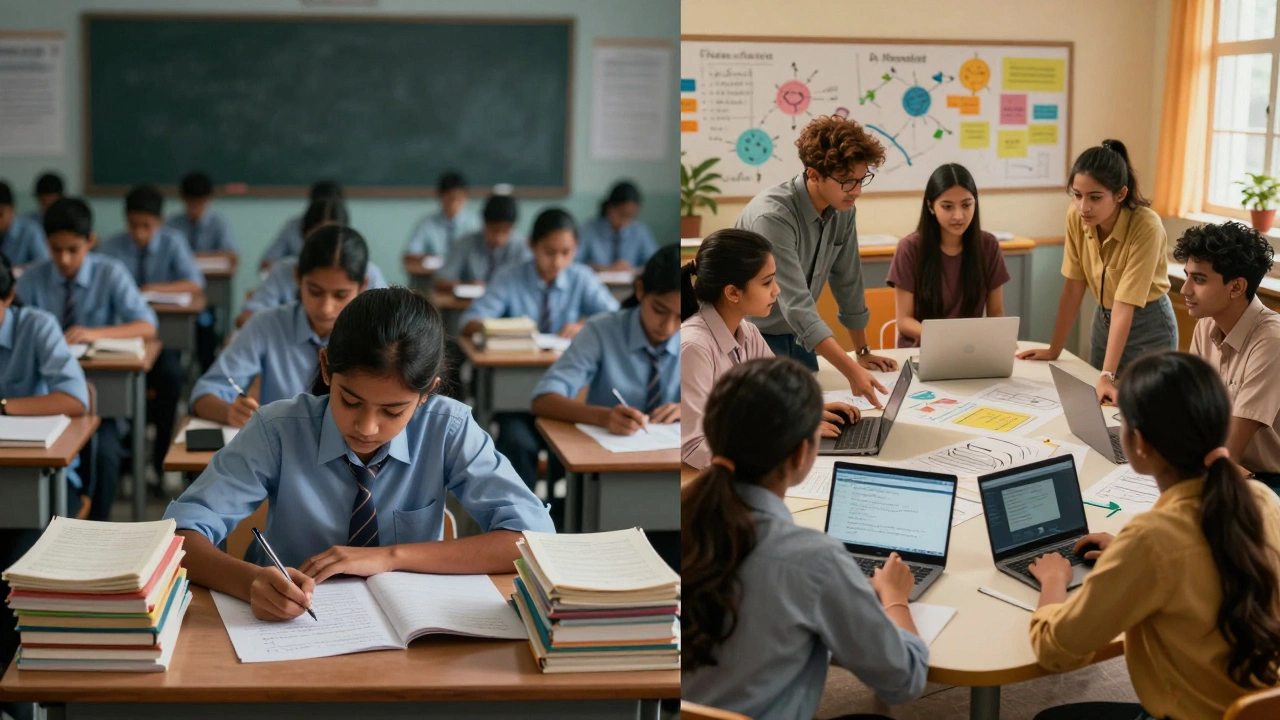
Here is the honest truth that most people won't tell you: CBSE is objectively harder in terms of raw content volume and exam intensity, but American schools are often harder when it comes to independent critical thinking and college admissions strategy. If you are trying to decide which path suits you-or if you are a student wondering why your friends across the ocean seem to have it "easier"-you need to look beyond just the textbooks.
I’ve spent years analyzing how these two massive educational ecosystems operate. One is built on rote memorization and standardized testing; the other thrives on holistic development and subjective grading. Neither is strictly "better," but they demand completely different skill sets from students. Let’s break down exactly where the pressure points lie in both systems so you can understand what you are actually signing up for.
The Core Philosophy: Rote Learning vs. Holistic Growth
To understand why one feels harder than the other, you first have to look at what each system values. The Central Board of Secondary Education (CBSE, India's central board of secondary education known for its standardized curriculum and rigorous examinations) is designed around uniformity. The goal is to ensure that a student in Delhi knows roughly the same material as a student in Mumbai. This creates a system where success is defined by how well you can recall specific facts and solve predefined problems under strict time limits.
In contrast, the American K-12 system varies wildly from state to state, but the general philosophy leans toward "holistic" education. Schools here prioritize participation, group projects, creative essays, and extracurricular involvement. You aren’t just graded on whether you got the right answer; you’re graded on how you arrived there. For a student who loves debate and creativity, this might feel easier. For a student who prefers clear-cut rules and definitive answers, the ambiguity of American grading can be incredibly stressful.
Curriculum Depth: The Math and Science Gap
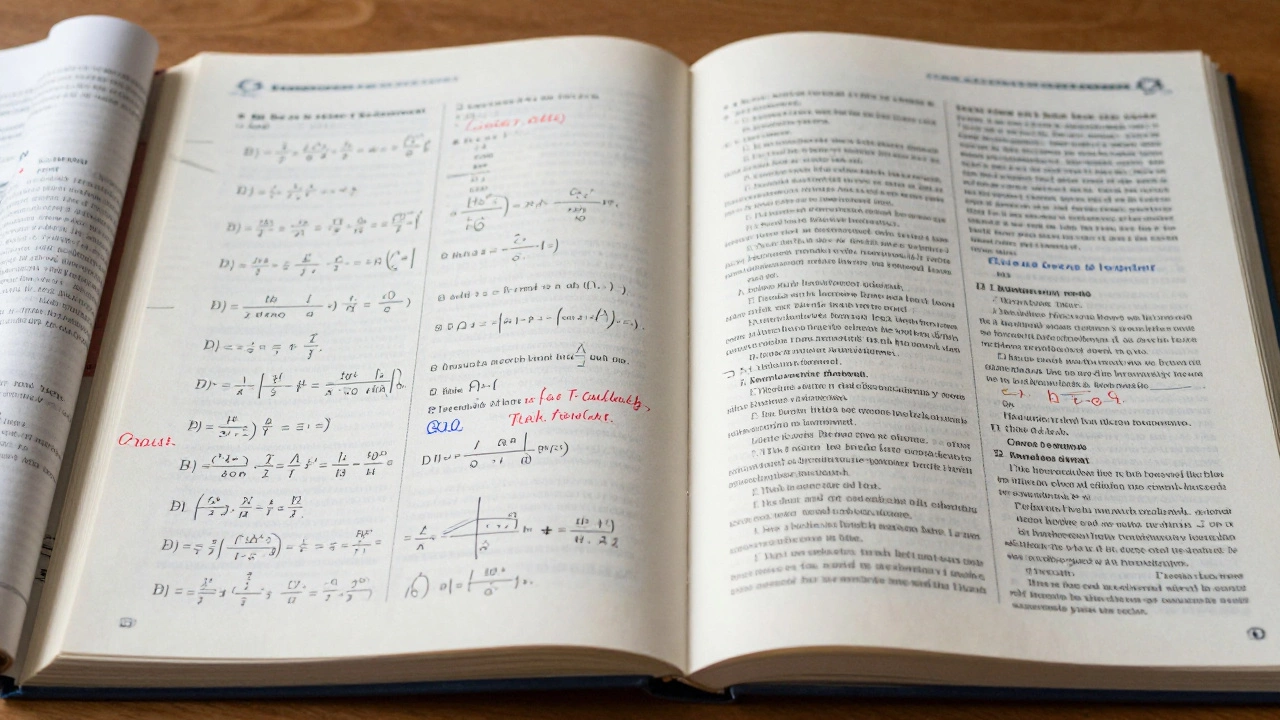
If we talk about pure academic rigor in STEM (Science, Technology, Engineering, and Mathematics), CBSE usually wins on depth. By Grade 10, CBSE students are tackling quadratic equations, trigonometry, and complex geometry proofs. In many American public schools, Algebra II or Pre-Calculus might not appear until Grade 11 or 12, and even then, the pace is often slower.
This difference becomes stark in physics and chemistry. CBSE requires detailed derivations and theoretical understanding that goes beyond simple application. An American student might learn *how* to use Newton’s laws to solve a problem, while a CBSE student must also derive the formula itself and explain the underlying principles in essay format during exams. This makes the CBSE syllabus feel much heavier because you cannot skip the theory to get to the practice.
| Feature | CBSE (India) | US Public Schools |
|---|---|---|
| Math Pace | Fast; Calculus introduced in Grade 11/12 | Variable; AP Calculus is optional and advanced |
| Assessment Style | High-stakes annual written exams | Continuous assessment, quizzes, projects |
| Homework Load | Heavy; daily assignments required | Moderate; varies by teacher |
| Critical Thinking | Focused on application of formulas | Focused on analysis and argumentation |
| Subject Choice | Limited flexibility after Grade 10 | Wide variety of electives available |
The Exam Culture: One Shot vs. Continuous Grading
This is where the "difficulty" shifts from intellectual challenge to psychological stress. In the CBSE system, your final board exams in Grades 10 and 12 carry enormous weight. These single-day, three-hour papers can determine your rank, your college admission, and sometimes your entire career trajectory. The pressure to perform perfectly in one sitting is immense. There is little room for error, and internal assessments count for a relatively small percentage of your final grade.
American schools operate on a continuous grading model. Your final grade is an aggregate of homework, class participation, midterms, finals, and projects. If you bomb a test, you can still recover through extra credit or better performance on later assignments. While this seems more forgiving, it introduces a different kind of difficulty: consistency. You cannot coast. You must stay engaged every single day for nine months. For students who struggle with long-term motivation, the American system can be surprisingly exhausting because there is no "big finish" line to sprint toward.
College Admissions: The Hidden Difficulty
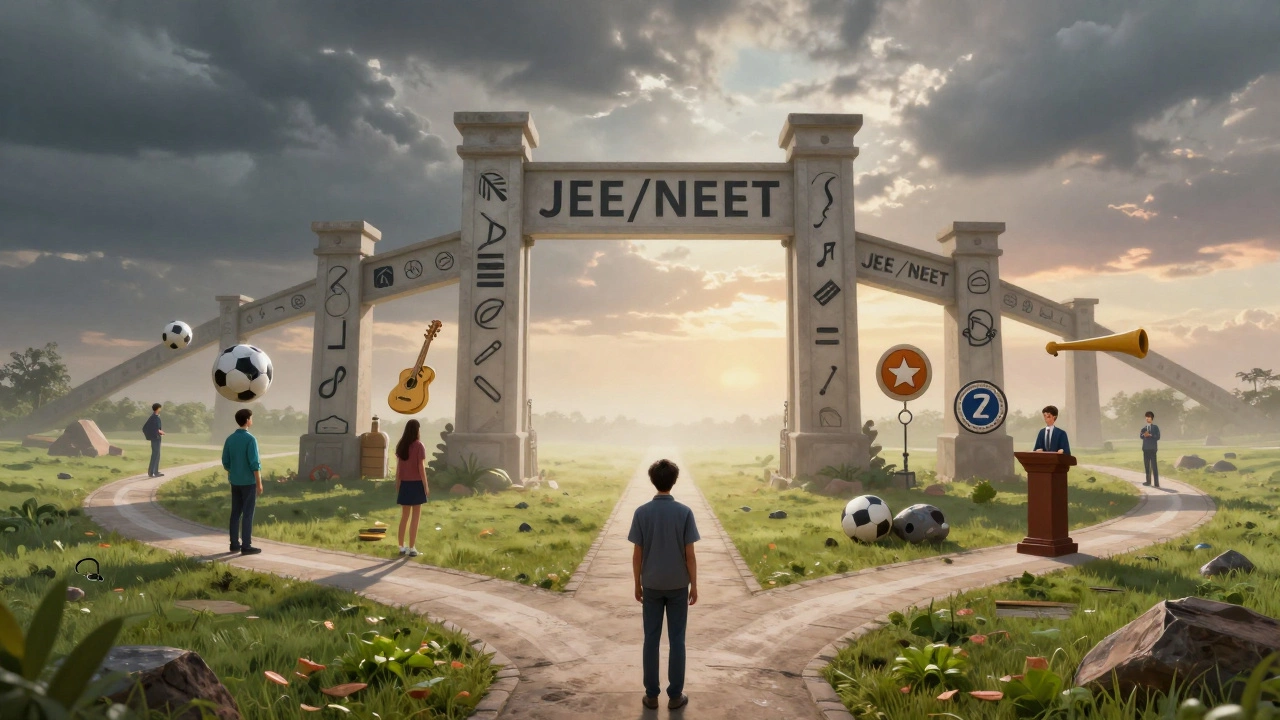
Many people forget that school doesn't end at graduation. The real "hardness" often lies in what comes next. In India, getting into top-tier institutions like the IITs or AIIMS requires clearing some of the toughest competitive exams in the world (JEE Advanced, NEET). The CBSE curriculum is essentially training ground for these tests. The difficulty here is binary: you either crack the cutoff or you don't. It is brutal, meritocratic, and unforgiving.
In the US, college admissions are a holistic puzzle. Yes, grades matter, but so do your extracurriculars, essays, letters of recommendation, and interview performance. You need to build a "brand" as a student. This requires soft skills that aren't taught in classrooms. You have to manage your time to play sports, join clubs, volunteer, and maintain a high GPA simultaneously. For many international students, navigating this subjective process is far more confusing and difficult than simply studying hard for a math test.
Language and Communication Skills
English proficiency is another area where the systems diverge. In CBSE, English is a subject to be studied. You learn grammar rules, vocabulary lists, and essay structures. While this builds a strong technical foundation, it doesn't always translate to fluent, spontaneous communication. Many CBSE graduates are excellent at writing formal essays but may hesitate in informal debates or presentations.
American schools immerse students in English usage from day one. Reading literature, writing analytical essays, and participating in class discussions are daily habits. The expectation is that you will express your opinions clearly and respectfully. This develops confidence and verbal agility. However, for non-native speakers entering the US system, this can be a significant hurdle. The speed of classroom interaction and the cultural nuances of humor and idioms can make the social aspect of learning feel very difficult.
Which System Is Better for You?
So, is CBSE harder? If you define "hard" as "more content to memorize and higher stakes for single exams," then yes, CBSE is significantly harder. It demands discipline, endurance, and a strong memory. It prepares you for environments where precision and accuracy are paramount, such as engineering and medicine.
If you define "hard" as "requiring constant self-management, creativity, and social navigation," then American schools present a unique challenge. They prepare you for dynamic workplaces where adaptability and communication are key. They force you to become a well-rounded individual rather than just a test-taker.
Your choice shouldn't be based on which one is "easier." It should be based on your learning style. Do you thrive under pressure with clear goals? Choose CBSE. Do you prefer flexibility and value personal expression? The American system might suit you better. Both paths lead to success, but they require different types of strength.
Is the CBSE curriculum recognized in the United States?
Yes, CBSE certificates are generally recognized by US universities. However, because the grading scale differs (CBSE uses percentages, US uses GPA), you may need to provide additional context or take standardized tests like the SAT or ACT to help admissions officers evaluate your academic standing accurately.
Do American students study less than CBSE students?
Not necessarily. While CBSE students spend more hours on textbook study and homework, American students often invest significant time in extracurricular activities, sports, and part-time jobs. The total workload is similar, but the distribution of effort is different. CBSE focuses heavily on academics, while US schools balance academics with other life skills.
Can I switch from CBSE to an American school halfway through?
It is possible but challenging. You would need to align your current grade level with the US system, which may involve repeating a year or taking placement tests. Additionally, you would need to adjust to a different teaching style and potentially fill gaps in subjects like history or civics that are emphasized differently in the US curriculum.
Which system is better for preparing for engineering careers?
CBSE provides a stronger foundational knowledge in mathematics and physics due to its rigorous syllabus. This gives students an advantage in competitive entrance exams. However, American universities often offer more flexible engineering programs that allow for interdisciplinary studies. If you aim for top Indian institutes, CBSE is ideal. If you plan to study abroad, either system works, but you will need to supplement with standardized tests.
How does the stress level compare between the two systems?
Stress manifests differently. CBSE students experience acute stress spikes around board exams, which can last for weeks. American students face chronic, low-level stress throughout the year due to continuous assessments, project deadlines, and the pressure to maintain a balanced profile for college applications. Both are stressful, but the timing and nature of the pressure vary.