Free Online Degrees: Real Options and Hidden Costs
 Aug, 28 2026
Free Degree Cost Estimator
"Tuition-free" doesn't mean "free." Use this tool to estimate your actual out-of-pocket expenses for a program like University of the People or similar accredited online degrees.
Enter details and click Calculate
Can you really get a degree without paying tuition? It sounds too good to be true. We’ve all heard the horror stories of student loans that take decades to pay off. So when someone says they earned a bachelor’s or master’s degree for free, your first instinct is probably skepticism. You’re right to question it. But yes, free online degrees exist. They aren’t magic, though. They require strategy, specific institutions, and an understanding of what “free” actually means in the academic world.
The Difference Between Free Courses and Free Degrees
Here is where most people get tripped up. There is a massive gap between a free certificate and a recognized degree. Platforms like Coursera or edX offer thousands of courses from Harvard, MIT, and Stanford for free. You can watch every lecture, read every PDF, and even submit assignments. But if you want a piece of paper that employers respect, you usually have to pay for the verified certificate. That might cost $50 to $100 per course.
A degree, however, is a package deal. It requires accreditation. Accreditation ensures that other schools and employers recognize your credits. Without it, your degree is just a hobby. UoPeople is accredited by the Distance Education Accrediting Commission (DEAC) in the US. This makes their degrees legitimate. Other platforms might let you stack certificates into a credential, but these rarely carry the same weight as a formal Bachelor of Science or Master of Business Administration.
Top Institutions Offering Tuition-Free Models
If you are serious about getting a degree without debt, you need to look beyond the big-name universities. Their online extensions often charge full price. Instead, focus on non-profit institutions designed specifically for low-income students or global access.
University of the People offers programs in Computer Science, Business Administration, Health Science, and Education. The total cost for a bachelor’s degree typically ranges from $4,860 to $5,300 over four years. That breaks down to roughly $120 per month. For many, this is manageable. The catch? You must pass proctored exams. These can be taken at local testing centers or via online proctoring software, which may add minor technical hurdles.
Bharathiar University Open Learning is another option, particularly for those with international credentials or connections to India. While not entirely free, some state governments in India subsidize open university degrees so heavily that the out-of-pocket cost becomes negligible. However, recognition outside India varies. Always check if the specific program holds NAAC or UGC approval before enrolling.
Then there are scholarship-driven paths. Some private universities offer full-ride scholarships for high-achieving students. This isn’t “free for everyone,” but it is free for you if you qualify. Look for merit-based aid rather than just need-based grants. Merit awards often cover 100% of tuition if you maintain a certain GPA.
Hidden Costs You Can’t Ignore
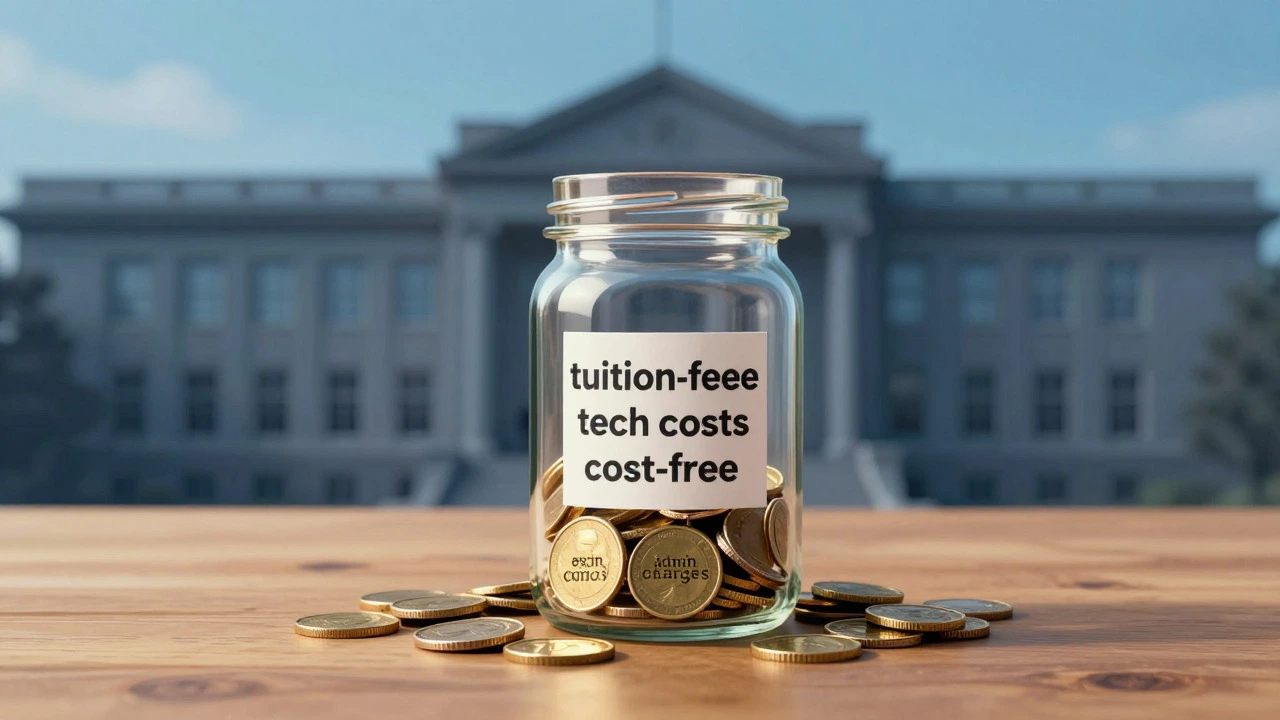
“Tuition-free” does not mean “cost-free.” If you budget only for tuition, you will run out of money halfway through your second year. Here is what else hits your bank account:
- Technology Fees: Reliable internet and a functional computer are non-negotiable. If you are using a library Wi-Fi, you lose flexibility. Budget for data plans if you live in a rural area.
- Exam Proctoring: As mentioned with UoPeople, final exams often require secure environments. Some third-party proctoring services charge $10-$20 per exam session.
- Textbooks: Many courses use Open Educational Resources (OER), which are free digital textbooks. But not all do. Check the syllabus before registering. If a textbook costs $100, buy the older edition. Content rarely changes drastically in one year.
- Application and Graduation Fees: These are one-time costs but can surprise you. Application fees range from $50 to $100. Graduation fees can hit $200. Factor these into your long-term plan.
Accreditation: The Dealbreaker
You cannot compromise on accreditation. Period. In the United States, regional accreditation is the gold standard. National accreditation is acceptable but less prestigious. Programmatic accreditation applies to specific fields, like nursing or engineering.
Why does this matter? Imagine you spend two years earning a degree from an unaccredited “diploma mill.” You apply for a job. The HR manager checks the database. Your school doesn’t appear. They reject your application. Worse, if you later want to pursue a master’s degree, the new university will refuse to accept your undergraduate credits. You start over. That is a waste of time and opportunity.
Always verify accreditation status directly with the accrediting body, not just the university’s website. Websites change; registries don’t lie. For US institutions, check the Database of Accredited Postsecondary Institutions and Programs maintained by the Department of Education.

How to Maximize Your Chances of Success
Online learning demands discipline. Without a professor standing over you, it is easy to fall behind. Here is how to stay on track:
- Treat it like a job. Set fixed hours for studying. If you work 9-to-5, study 7-to-9. Consistency beats intensity.
- Engage with peers. Discussion boards aren’t just busywork. They help clarify concepts. Students who participate actively tend to retain information better.
- Use free resources wisely. Khan Academy, YouTube tutorials, and public library databases supplement your coursework. Don’t rely solely on the provided materials.
- Plan for transferability. Even if you finish at a tuition-free school, keep records of your syllabi. If you ever decide to transfer credits to a more expensive institution, having detailed course descriptions helps the evaluation process.
| Institution | Accreditation Status | Estimated Total Cost | Best For |
|---|---|---|---|
| University of the People | DEAC (National) | $4,860 - $5,300 | Global students, career changers |
| Coursera/edX Certificates | University-backed (Not a degree) | $300 - $600 per cert | Skill-specific upskilling |
| State Open Universities (India) | UGC Recognized | $100 - $500 (subsidized) | Residents of eligible regions |
| Full-Ride Scholarships | Varies by Institution | $0 (if awarded) | High-achieving students |
Is a Free Degree Worth It?
It depends on your goals. If you need a credential to meet a hiring requirement-like a government job or corporate promotion-a free accredited degree works perfectly. Employers care that you finished, not necessarily where you paid premium prices. Studies show that skills and experience outweigh brand prestige after the first few years of employment.
However, if you aim for elite networking opportunities, a free degree might lack the alumni connections of a top-tier university. You build your network yourself. Join LinkedIn groups, attend virtual conferences, and reach out to professionals. You have to work harder to create visibility.
Ultimately, the value lies in completion. A degree in hand beats no degree every time. And doing it without crushing debt gives you financial freedom immediately upon graduation. You can invest in certifications, start a business, or save for a home while your peers are still paying off interest.
Are free online degrees respected by employers?
Yes, if they are accredited. Employers generally look for accreditation status rather than the specific name of a tuition-free school. As long as the institution is recognized by a legitimate accrediting body, the degree holds value. Focus on gaining relevant skills and internships to complement the credential.
Do I need to pay for textbooks at University of the People?
Mostly no. UoPeople uses Open Educational Resources (OER), which are free digital textbooks. In rare cases, you might need to purchase a specialized book, but the curriculum is designed to minimize extra costs. Always check the specific course syllabus for any required physical materials.
Can I transfer credits from a free online degree to another university?
Transfer policies vary widely. Credits from nationally accredited institutions like UoPeople may not transfer to regionally accredited universities. If you plan to pursue a master’s degree elsewhere, research that university’s transfer policy beforehand. Keeping detailed syllabi can help during the credit evaluation process.
What is the difference between tuition-free and free?
Tuition-free means you do not pay for instruction or faculty salaries. However, you still pay for administrative services, technology infrastructure, and examination processing. True “free” implies zero cost, which is extremely rare for accredited degrees. Always read the fee schedule carefully.
How long does it take to complete a free online degree?
A bachelor’s degree typically takes four years if you study full-time. Part-time options allow you to stretch this to six or seven years. Self-paced models exist, but most accredited programs follow structured terms to ensure consistent progress and peer interaction.