CBSE vs ICSE vs IB: Which School Syllabus Is Best for Your Child in 2026?
 Jun, 20 2026
School Syllabus Matchmaker 2026
Not sure if CBSE, ICSE, or IB is right for your child? Answer these 5 quick questions based on their personality and your family goals to find the best fit.
Why this fits:
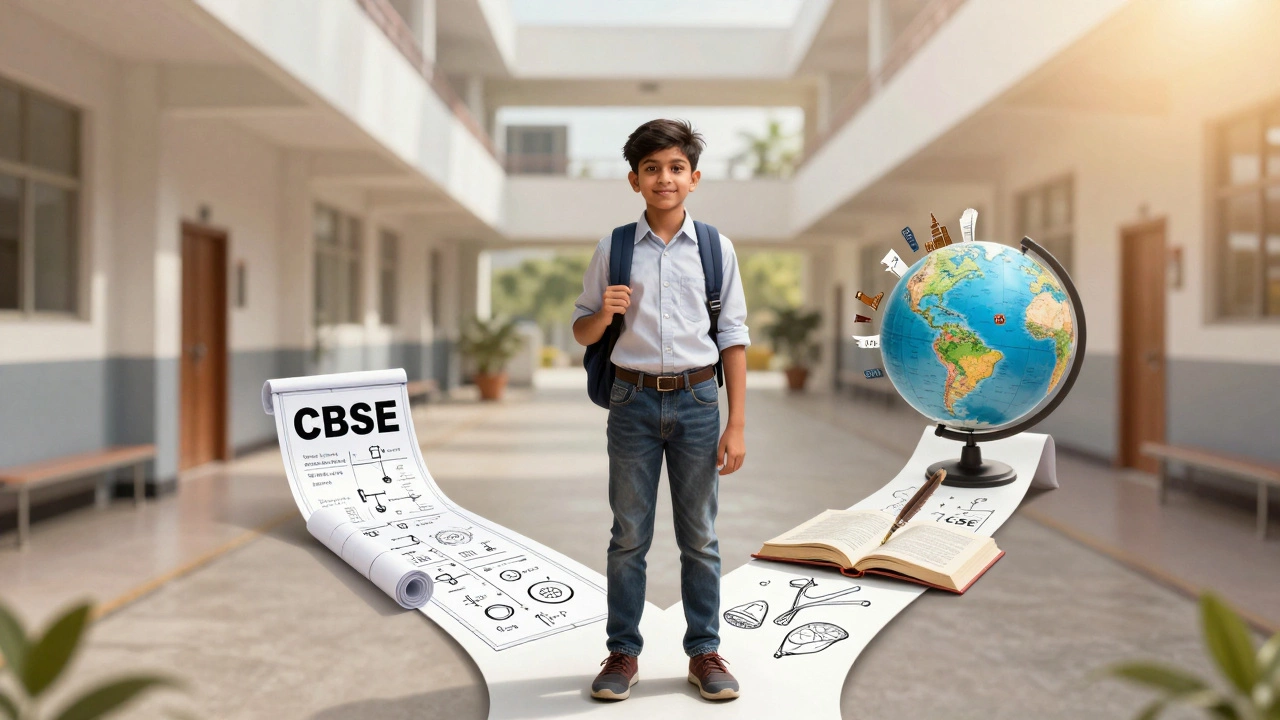
Picking a school syllabus feels like picking a religion. You want the right fit, but everyone tells you their way is the only true path. One parent swears by the discipline of CBSE is the Central Board of Secondary Education, India's most widely followed national curriculum known for its structured approach and alignment with competitive exams.. Another insists on the holistic growth promised by international boards. The truth? There is no single "best" syllabus. There is only the best syllabus *for your child*.
In 2026, the landscape has shifted. With AI tools changing how we learn and global mobility becoming easier than ever, the old arguments about "rote learning" versus "creative freedom" are outdated. What matters now is adaptability, critical thinking, and future-readiness. Let’s cut through the noise and look at what each major board actually offers, so you can make a choice that fits your family’s goals, not just trends.
The Big Three: CBSE, ICSE, and IB
When parents in India (or Indian diaspora families abroad) talk about school boards, they usually mean one of three giants: CBSE, ICSE (Indian Certificate of Secondary Education), or IB (International Baccalaureate). Each serves a different purpose. Understanding their core philosophies is the first step to making a decision.
CBSE is built for efficiency and standardization. It follows a uniform pattern across thousands of schools. If your goal is to prepare your child for national-level entrance exams like JEE (engineering) or NEET (medicine), CBSE is the default highway. Its syllabus is concise, exam-oriented, and predictable. In 2026, CBSE has also integrated more competency-based questions, moving slightly away from pure memorization, but the core remains academic rigor in science and mathematics.
ICSE, governed by the Council for the Indian School Certificate Examinations, is often called the "detail-oriented" board. It places heavy emphasis on English language proficiency, literature, and humanities. The syllabus is broader and deeper than CBSE, especially in languages and social studies. If you value strong communication skills and a well-rounded liberal arts foundation, ICSE shines here. However, it requires more homework and reading time.
IB is the global citizen’s choice. Offered by independent schools worldwide, the IB Diploma Programme focuses on inquiry-based learning, research, and community service. It doesn’t just teach subjects; it teaches how to think. Students write extended essays, engage in creative arts, and participate in CAS (Creativity, Activity, Service) projects. It’s rigorous, expensive, and highly respected by universities abroad, particularly in Europe and North America.
Matching the Syllabus to Your Child’s Learning Style
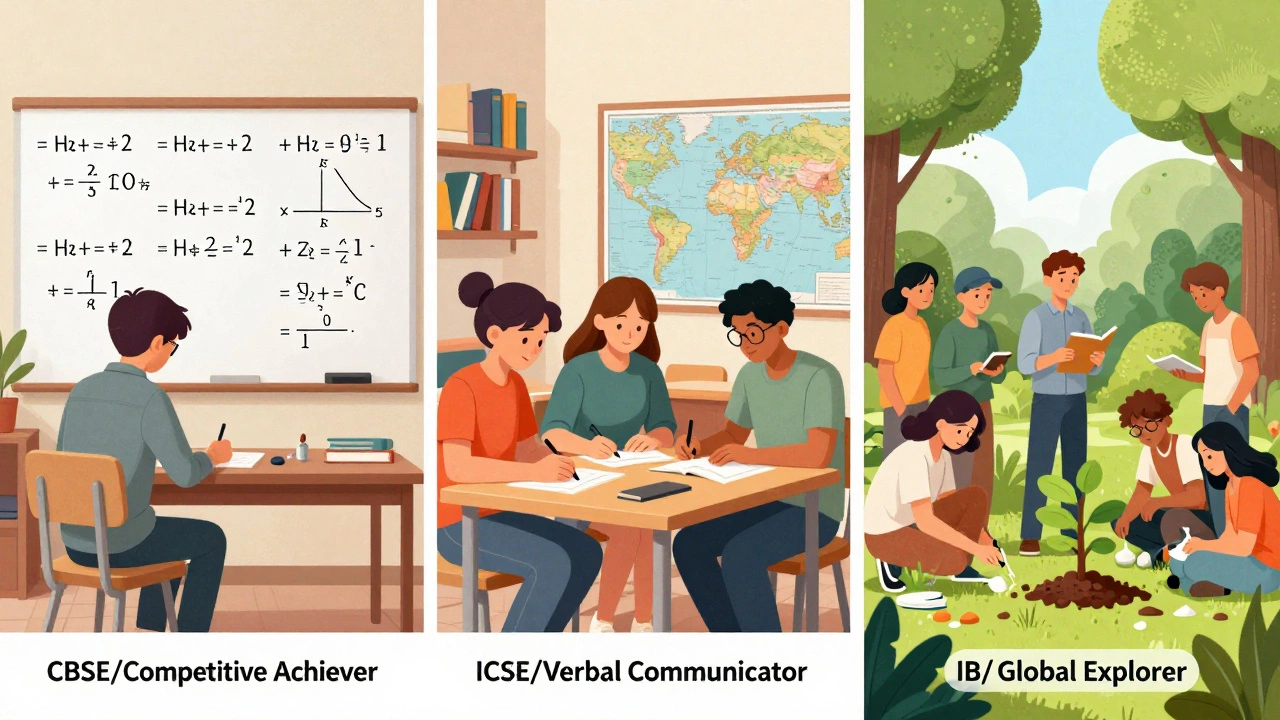
Your child isn’t a blank slate. They have a personality, strengths, and weaknesses. A syllabus that works for a hyper-focused STEM aspirant might crush a creative writer. Here’s how to match the board to the student:
- The Competitive Achiever: If your child thrives under pressure, loves clear rules, and aims for top engineering or medical colleges in India, stick with CBSE. The alignment with coaching institutes like Allen or FIITJEE makes preparation seamless. The stress is high, but the path is clear.
- The Verbal Communicator: Does your child love debating, writing stories, or analyzing history? ICSE will nurture those talents. The extensive English curriculum builds vocabulary and articulation skills that serve them well in law, journalism, or business later on.
- The Global Explorer: Are you planning to move countries? Or does your child dream of studying at Oxford, MIT, or Toronto University? IB is the golden ticket. Universities recognize the IB diploma as proof of independence and intellectual curiosity. But be warned: it demands self-discipline. There are no hand-holders in IB classrooms.
The Hidden Costs: Time, Money, and Stress
We rarely talk about the non-academic costs of a syllabus. These matter just as much as grades.
Time Commitment: ICSE students typically spend 2-3 hours daily on homework due to the volume of content. CBSE is lighter, allowing more time for extracurriculars or coaching. IB is unique-it’s not just homework; it’s project work. An IB student might spend weekends conducting field research or organizing charity events. Ask yourself: Can your household handle this level of engagement?
Financial Impact: CBSE schools range from government-run (free) to elite private institutions ($10,000+ per year). ICSE schools are mostly private and mid-to-high tier. IB schools are almost exclusively premium private institutions, often costing $15,000-$30,000 annually in major metros like Mumbai or Delhi. If budget is tight, CBSE offers the best value-for-money ratio.
Mental Health: This is the big one. In 2026, parental awareness around burnout is higher than ever. CBSE’s exam-centric culture can lead to anxiety if not managed. ICSE’s workload can cause fatigue. IB’s lack of structure can cause confusion for students who need guidance. Choose a board that matches your child’s emotional resilience, not just their IQ.
| Feature | CBSE | ICSE | IB |
|---|---|---|---|
| Focus Area | Science & Math, Exam Prep | English, Humanities, Depth | Critical Thinking, Global Issues |
| Difficulty Level | Moderate (Structured) | High (Volume-heavy) | Very High (Self-driven) |
| Best For | JEE/NEET Aspirants | Arts/Law/Business | Study Abroad |
| Avg. Annual Cost (Private) | $2,000 - $10,000 | $4,000 - $12,000 | $15,000 - $30,000+ |
| Flexibility | Low | Medium | High |
The Rise of State Boards and Hybrid Models
Don’t overlook state boards. In states like Maharashtra, Tamil Nadu, or Karnataka, state boards have improved significantly. They often teach in regional languages, which preserves cultural identity and helps children connect with local communities. If you plan to stay in your home state for college, a strong state board education is perfectly valid and less stressful.
Also, watch out for "hybrid" schools. Many modern institutions offer CBSE certification but teach using IB methodologies. They give you the safety net of a recognized Indian board while fostering creativity. This is a sweet spot for many urban parents in 2026.

How to Decide: A Practical Checklist
Before signing any admission form, ask these five questions:
- Where do you see your child in 10 years? If it’s IIT Bombay, lean CBSE. If it’s UBC in Canada, consider IB or ICSE with strong IELTS scores.
- What is your child’s natural rhythm? Do they need structure (CBSE) or freedom (IB)? Don’t force a square peg into a round hole.
- Can you support the workload? Will you help with IB research papers? Can you afford ICSE tuition fees? Be honest.
- Is the school better than the board? A great teacher in a mediocre board beats a poor teacher in a prestigious board. Visit the campus. Talk to current parents.
- Are you prepared for relocation? CBSE is easy to transfer within India. IB is easy to transfer globally. ICSE is harder to switch mid-stream due to syllabus differences.
Final Thoughts: It’s About Fit, Not Fame
The "best" syllabus is the one that keeps your child curious, confident, and calm. No board guarantees success. Success comes from consistent effort, supportive parenting, and a learning environment that respects the child’s individuality. Whether you choose CBSE for its stability, ICSE for its depth, or IB for its breadth, remember: you’re not just buying a curriculum. You’re investing in your child’s mindset.
Talk to your child. Observe them. Then choose. The rest will follow.
Is CBSE too rigid for creative students?
Not necessarily. While CBSE is structured, many schools now integrate art, music, and debate clubs. The key is finding a CBSE school that values extracurriculars. Also, CBSE’s recent shift toward competency-based questions allows for more application-based thinking rather than just rote memorization.
Can an ICSE student easily switch to CBSE later?
It’s possible but challenging. ICSE covers topics in greater depth, especially in English and History. Switching to CBSE might feel easier in science but harder in adapting to the faster pace and different exam patterns. Most experts recommend sticking with one board until Grade 10 to avoid confusion.
Is IB worth the high cost?
If you plan to study abroad, yes. IB graduates often receive scholarships and fast-track admissions at top global universities. However, if your child stays in India for college, the ROI may be lower compared to CBSE, where direct alignment with JEE/NEET saves money on coaching.
Which board is best for coding and tech skills?
CBSE includes Computer Science as a core subject with Python and C++ in the curriculum, making it ideal for tech enthusiasts. IB offers Computer Science as an optional subject with a focus on problem-solving. ICSE has Informatics Practices. For serious coders, CBSE provides the strongest foundational base aligned with Indian tech industry needs.
Do employers care which school board my child attended?
Rarely. Employers care about skills, degrees, and experience. However, certain boards signal specific traits: IB suggests independence and global awareness, while CBSE suggests discipline and analytical strength. In the long run, university reputation and internships matter far more than the school board.